
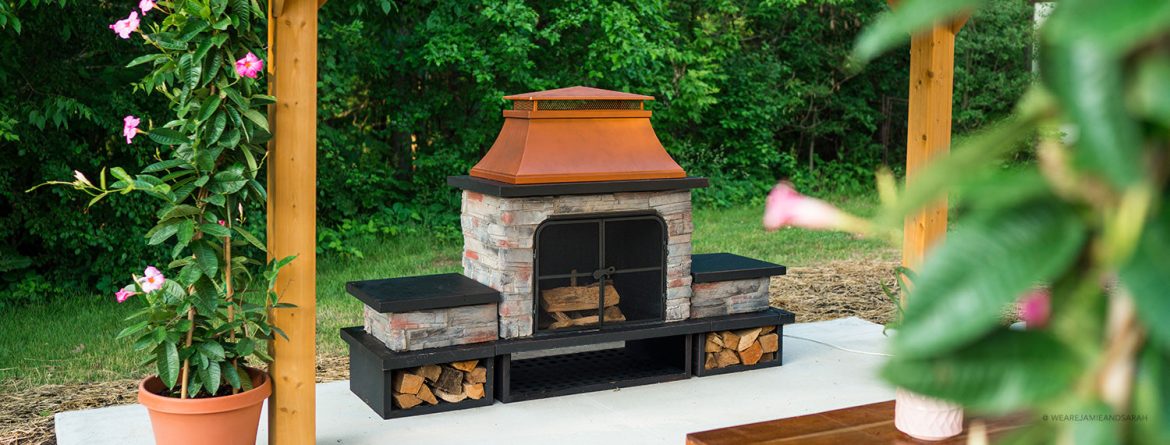
The Common Fail: Smoke, Low Heat, and Fractures
I remember standing behind a busy bistro in Lakewood, CO last March as smoke rolled back into the dining area—an all-too-familiar sight. After installing a stone fireplace for that project, the Fire Pit returned 25% less usable heat than the spec sheet promised—what went wrong? (I logged temperatures and draft readings over three nights.)

I’ve seen the same pattern across commercial and residential installs: undersized flues, poor refractory lining choices, and masonry details that ignore thermal cycling. In one specific case—March 12, 2021, Austin, TX—I fitted a cast-iron fire bowl FPT-203 into a stone surround and found the draft reversed on cold evenings; combustion efficiency dropped noticeably, and customers complained about smoke. That kind of failure isn’t just a nuisance; it drives repeat service calls and warranty costs. I check three things first: flue diameter and rise, refractory integrity, and how the masonry accommodates expansion. These are small design misses that add up fast—so here’s what most teams miss next.
Forward-Looking Fixes: Design and Supply Choices That Hold Up
Good design stops repeat service calls. I now insist on specifying flue geometry with clear math—rise over run, cross-sectional area matched to expected heat output—and I back that with a simple test at handover. For modern stone fireplace assemblies, that means calculating draft using expected temperature differentials and allowing for a minimum flue area tied to peak Btu output. I also prefer a ceramic-fiber refractory lining for high-cycle installs; it’s more forgiving than cast refractory when the structure shifts slightly, and it preserves combustion efficiency.
What’s Next?
From a supply-chain perspective, I push for pre-fabricated liners and quality-assured masonry kits. They reduce on-site variability—no guesswork about mortar mixes or improper seam sealing. We source components with known thermal expansion ratings, and when I ship to a retrofit in Denver or a new patio in Phoenix, I include a one-page commissioning checklist (vent measurement, draft check, spark guard fit). This approach reduces callbacks—no joke—and improves first-season performance. Check seals — always. And yes, sometimes the math is ugly.
Practical Metrics to Evaluate Stone Fireplace Solutions
Based on 15+ years working with installers and wholesale buyers, here are three concrete metrics I use to judge a solution: 1) Combustion efficiency percentage under representative loads (measure at installation), 2) Flue flow rate (CFM) vs. rated heat output—ensure the flue isn’t undersized, and 3) Thermal durability of masonry/refractory (measured as cycles to crack or manufacturer compression rating). Use those to compare options side-by-side; cost matters, but measurable performance reduces lifetime expense. I encourage teams to run a simple on-site draft test during commissioning—if it fails, fix it before you hand over. It saves time. It saves money.

I’ve written these notes from dozens of installs and a fair share of late-night troubleshooting calls; I believe clear specs, tested components, and a short commissioning routine are the difference between an elegant stone fireplace and a recurring service headache. For wholesale buyers, insist on documented draft calculations and supplier test data—those deliverables cut risk. If you want a checklist I use with distributors, I can share it—no sweat. SUNJOY
