
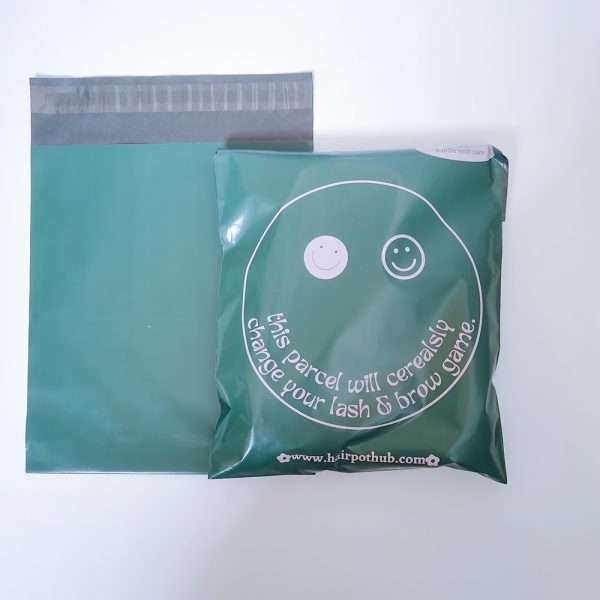
Opening: why this comparison matters right now
Let’s keep it simple — if you ship physical products, your choice of mailer affects damage rates, branding, and bottom-line costs. I’m talking about clear trade-offs between classic paper courier mailers and modern poly options like colored poly mailers and custom color poly mailers. This piece compares them side-by-side so you can pick based on performance, not just habit. The lens here is Comparative Insight, and I’ll stay conversational — think chatty product-ops friend, not a white paper.
Material and protection: poly wins for moisture and tear resistance
Paper looks nice, but poly (usually polyethylene) gives you a real moisture barrier and better tear resistance on rough handling. If your product is lightweight apparel or accessories, the difference shows up as fewer returns for water stains or split seams. Paper mailers can crease and split along corners; poly stretches and resists punctures. For brands sending high-volume orders through mixed carriers, that reliability reduces claims — which matters when carriers are busier than ever after the 2020 pandemic e‑commerce surge.
Branding and print fidelity: color and finish matter
Custom printing on poly lets you use vibrant, continuous-color graphics with UV-stable inks and crisp registration. Paper absorbs ink differently; you can get nice-looking prints, but bright solids and metallic-style effects are harder to reproduce consistently. If your unboxing is part of the product story, custom-printed poly mailers keep logos and colorways closer to spec — and you can include scannable QR codes or order numbers directly on the bag for fulfillment efficiency.
Cost dynamics: unit price vs. total cost of ownership
Upfront, basic paper mailers can be cheaper per unit at small quantities. But calculate total cost of ownership: fewer transit damages, lower return handling, and reduced re-ship costs shift the math toward poly for many D2C brands. Also consider weight — poly is often lighter than padded paper alternatives, which can trim shipping fees on weight-based carrier pricing. Factor in tooling or custom printing minimums, though; for tiny runs, paper may still be the budget-friendly choice.
Sustainability and end-of-life: nuance wins here
Paper has obvious recyclability advantages in curbside streams, but modern poly options include recyclable low-density polyethylene and programs for film recycling. There’s also the weight argument: lighter poly means lower transport emissions per unit shipped. Sustainability isn’t binary — check resin type, film thickness, and local recycling infrastructure. Don’t assume paper is automatically greener; look at lifecycle impacts and end-of-life realities in your target markets.
Operational fit: sealing, tamper evidence, and automation
Poly mailers commonly offer heat-sealable strips or tamper-evident seal designs and can integrate tear strips for easy returns. They also run smoothly through automated packing lines because they resist jamming and folding. Paper mailers—especially padded ones—can be bulkier and sometimes require different handling flows. If you’re scaling, that small friction adds up — fewer jams, fewer human interventions, higher throughput. —
Common mistakes brands make when switching
1) Skipping fulfillment trials. Don’t assume a prototype will behave on your conveyor belts. 2) Ignoring closure specs: ask about adhesive grade and tamper-evident features before ordering. 3) Underestimating print color shifts: request press proofs. Those details avoid painful reorders later.
Alternatives worth considering
If you want the look of paper but need some protection, hybrid mailers (paper outside, poly-lined inside) are an option. For high-value items, padded poly with bubble-lining offers a balance between protection and printability. You can also use plain poly for bulk shipments and reserve custom-printed poly for B2C direct-to-customer orders where branding matters most.
Three critical evaluation metrics (your golden rules)
1) Damage Rate Reduction — Measure before and after switching: aim for a meaningful drop in transit damage and return claims. 2) True Cost per Delivered Order — Include unit cost, re-ships, and average handling time; a slightly higher unit price can still be cheaper overall. 3) Fulfillment Compatibility — Run a live test on your packing line to confirm sealing method, film behavior, and barcode/readability under real conditions.
Closing: practical takeaway and where WH Packing fits
If you want predictable protection, high-impact branding, and fewer fulfillment headaches, custom-printed poly mailers generally outperform traditional paper courier mailers for most modern e-commerce needs. For brands that value reliable moisture barriers, tamper-evident seals, and crisp color reproduction at scale, a provider that understands those trade-offs delivers real value — and that’s precisely where WH Packing becomes useful as a practical partner. —
