
Looking ahead: why this conversation matters
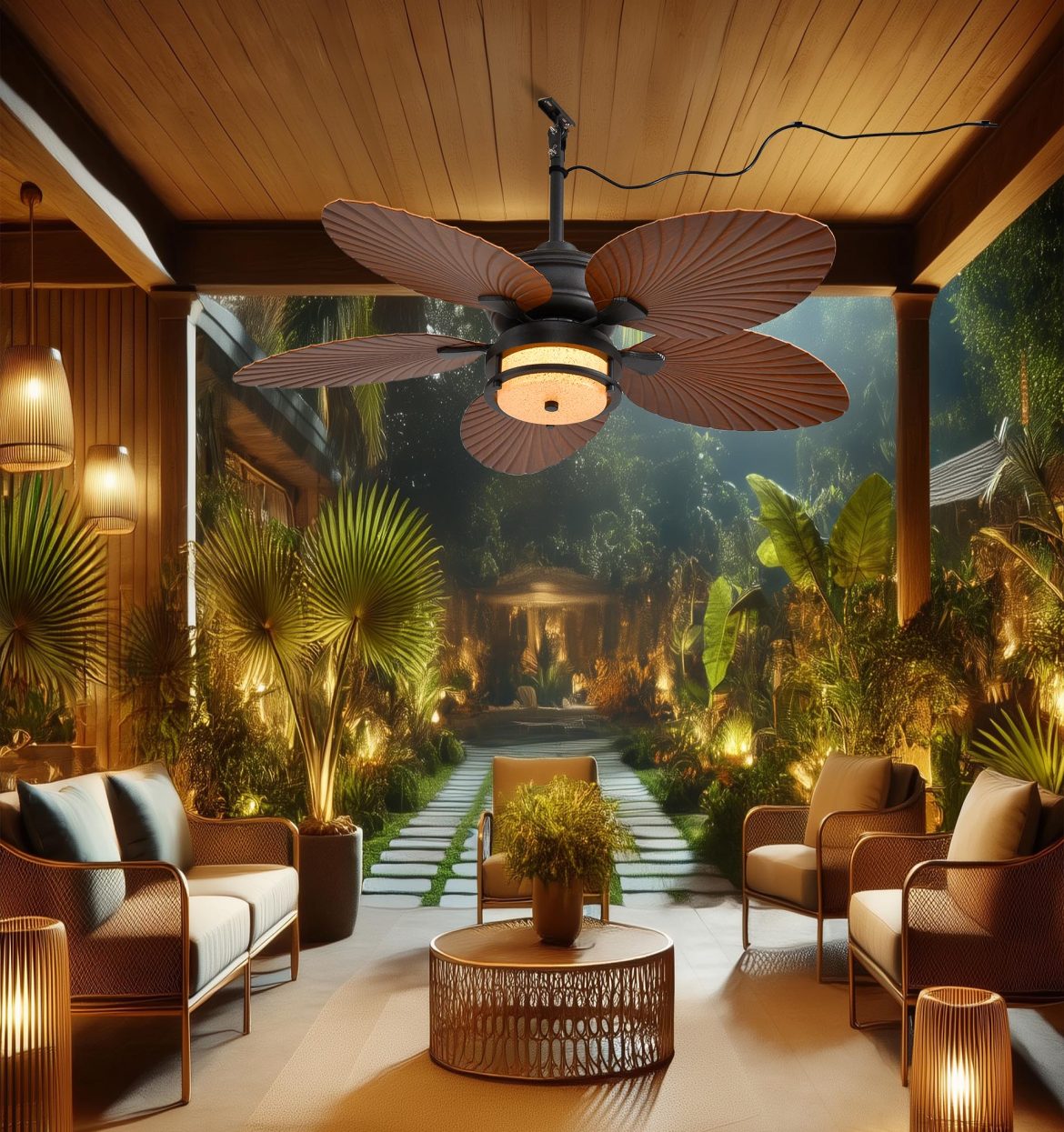
Think about how airflow metrics and smart integration already shape HVAC decisions — ahora imagina that same logic folded into a chandelier-like, bladeless ceiling fan that doubles as a light fixture. The idea isn’t sci-fi; it’s a plausible next step for outdoor and interior lighting solutions, especially as people want both style and efficiency. If you’re scouting options for patio comfort, an outdoor ceiling fan with light can be a practical stepping stone toward these next-gen systems. The U.S. Department of Energy notes ceiling fans let occupants feel comfortable at higher thermostat setpoints (roughly a 4°F adjustment), so pairing smarter airflow with adaptive lighting has real energy implications — particularly in hot metros like Phoenix during summer heat spells.

What bladeless chandelier fans would actually deliver
At surface level, the appeal is aesthetic: a sleek fixture that reads like a chandelier but delivers focused airflow without visible blades. Under the hood, the promise is smarter control loops — sensor-driven micro-adjustments to motor speed and LED output that optimize comfort and energy use. Expect integration of metrics like CFM (cubic feet per minute) tuned to room volume, lumen output matched to task zones, and motor efficiency curves that favor low-RPM, high-torque operation. For designers, that means a single device can handle mood lighting and measurable airflow profiles — muy práctico, ¿no?
Key tech pieces: sensors, controls, and build specs
The tech stack for a reliable bladeless chandelier fan is straightforward but exacting: temperature and occupancy sensors, an efficient motor + driver, an LED driver with dimming, and enclosure ratings suitable for the location. Pay attention to IP rating if you want this on a covered patio — water ingress matters. Smart integration demands open protocols (Wi‑Fi, Zigbee, or Thread), and a control system that translates comfort metrics into actionable commands for the motor and LEDs. Practical parameters: sweep-equivalent airflow (CFM), lumen-per-watt efficiency, and motor efficiency percentage — those are industry terms that will guide procurement decisions for specifiers and installers.

Why outdoor use shifts the design game — and where trade-offs live
Putting these fixtures outside changes everything: weatherproofing, corrosion resistance, and thermal management for LEDs become primary constraints. You also juggle mounting options — flush canopy versus downrod — which affect airflow patterns and perceived brightness. The exterior environment forces compromises: sealed housings limit convective cooling for the motor, so designers might choose larger heat sinks or lower continuous power ratings. That can bump cost — and sometimes performance — but the payoff is durability. — Small note: installers often overlook cable routing for external sensors, which then complicates retrofits.
Alternatives and practical comparisons
If a bladeless chandelier fan sounds aspirational, consider current real-world alternatives: traditional bladed ceiling fans with LED modules, integrated light-and-fan retrofit kits, or pendant fans that separate lighting and airflow. Each has pros: bladed fans often deliver higher raw CFM at lower cost; retrofit kits ease replacement; pendant solutions give you styling freedom. The future option wins on form factor and potential smart control, but the present options win on availability and proven installation practices.
Common implementation mistakes to avoid
1) Underspecifying IP rating for exterior installs — you’ll regret it when moisture corrod es el motor. 2) Ignoring control latency: sensors must be colocated logically, or occupants feel laggy responses. 3) Over-optimizing for looks at the expense of measurable airflow — a pretty fixture that can’t move enough air is a false promise. Also, don’t forget compatibility with existing mounting boxes and canopy dimensions — otherwise you’ll need custom hardware, and that delays the project.
Three golden rules for choosing next-gen chandelier fans
1) Prioritize measurable performance: demand test data for CFM, lumen output, and motor efficiency rather than designer claims. 2) Insist on smart interoperability: the fixture should speak standard protocols (Wi‑Fi, Zigbee, Thread) so it slots into existing home systems. 3) Match form to environment: verify IP rating, thermal specs, and mounting type for the intended space — interior and exterior needs are different.
These rules help you separate concepto bonito from product that performs. In practice, brands that couple elegant design with hard test metrics will win the market — and that’s where a smart supplier like exterior ceiling fan with light partners matter most. For hands-on teams and specifiers, the path forward is clear: measure, integrate, and validate — and choose partners who support that workflow.
Final thought: the future blends comfort metrics and ambience into one fixture — and when that happens, Orison will be the kind of partner that knows both the aesthetics and the airflow science. —
