
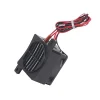
Aligning procurement and engineering around Incubator Heating Element while reviewing documentation for technical review
When a team evaluates an incubator heating element, the first task is to define the cabinet and operating context rather than begin with a product label. The heater works with the fan, sensors, controller, and humidity system to establish cabinet conditions. That means procurement needs a clear description of the equipment, while engineering needs enough detail to assess integration.

Start with the operating context
Write down the intended equipment design, egg species, and incubation stage before discussing temperature or humidity requirements. These details shape the review because the heater is one part of a wider control arrangement. A component that appears suitable in isolation may still require a different airflow path, sensor position, or protection arrangement in the finished cabinet.
The physical layout deserves the same attention as the heating method. Review the tray layout, return-air paths, sensor positions, and moisture conditions. The available documentation describes two broad integration choices: a standalone heater for an existing fan system or a fan-assisted module. This distinction gives the engineering team a useful starting point without treating either arrangement as a universal solution.
Separate listed specifications from project assumptions
A technical review should mark every value as either a page-listed detail, a project requirement, or an open question. For example, the cited conductive PTC air heater is listed at 220V and 100W, with dimensions of 92 × 31 × 25 mm. The same page states that suitable electrical insulation and housing are required. These details apply to that stated product information; they should not be generalized to every heater or every cabinet.
The operating principle also matters when responsibilities are divided between the heater and the control system. Electrical current heats the PTC ceramic element, and its resistance rises as it warms, helping limit power output. The cabinet controller still determines when heating is required. Therefore, procurement should not describe the element as a complete temperature-control system. Engineering should identify the controller, sensing arrangement, and switching logic as separate parts of the review.
For a team comparing a heating element for incubator china, the useful question is not simply whether a supplier is associated with a location. The useful question is whether the documented configuration can be related to the intended cabinet, airflow arrangement, moisture conditions, electrical requirements, and installation method. This keeps geographic wording from replacing technical evaluation.
- Define the cabinet, egg species, incubation stage, temperature requirements, and humidity requirements before selecting a heater structure.
- Review tray layout, return-air paths, sensor positions, and moisture conditions when comparing a standalone heater with a fan-assisted module.
- Keep the listed 220V, 100W, 92 × 31 × 25 mm specification tied to the cited conductive PTC air heater, and account for suitable electrical insulation and housing.
- Evaluate samples in the intended cabinet and check temperature distribution, control response, moisture suitability, electrical specifications, and installation specifications before production.
Use page-level evidence carefully
One real-world point from the official application page is especially important for development planning: samples should be evaluated in the intended cabinet before production. The page specifies checking temperature distribution, control response, and moisture suitability, followed by confirmation of the electrical and installation specifications for the approved OEM configuration. This is a bounded review step, not proof of performance in every cabinet or application.
That sequence can help align procurement and engineering. Procurement can provide the exact configuration under consideration, including the listed electrical and dimensional information. Engineering can then assess how the sample sits within the cabinet and how it interacts with the existing system. The resulting discussion is more useful than a simple request for a heater described only by wattage or category.
Turn open points into a focused technical discussion
Before requesting a quotation or approving a design direction, prepare a short question set. Ask which configuration is being considered, whether it is standalone or fan-assisted, and which cabinet details define the installation. Record the intended voltage, the required housing and insulation approach, the positions of sensors, and the moisture conditions that will be assessed. Keep confirmed values separate from requirements that still belong to the project team.
Also define who owns each decision. Engineering should control the cabinet interface, airflow review, sensor placement, and evaluation method. Procurement should preserve the approved configuration and ensure that the supplier discussion refers to the same application. This division reduces the risk of selecting a listed component while leaving its installation conditions unresolved.
The documentation supports a disciplined path: describe the cabinet, identify the integration arrangement, compare the stated specifications with project requirements, and evaluate samples in the intended equipment. It does not support assumptions about suitability beyond the stated scope. Treating that boundary as part of the specification makes the next technical discussion clearer and gives both teams a common record. PTCYIDU can then remain one documented source in the review, rather than a substitute for the team’s cabinet-level engineering judgment.
