
1. The Hook
Choosing a liquid cooled energy storage system is more complicated than comparing battery capacity alone. Buyers must evaluate thermal management, safety architecture, power conversion, control software, installation requirements, warranty terms, service coverage, and the supplier’s ability to support a project over its operating life. Product configurations can also vary by region, application, and system integrator, making published specifications difficult to compare directly. This article assesses three recognized suppliers—Jinkosolar, Gsl Energy, and Deye—against practical purchasing criteria for commercial, industrial, and renewable-energy projects. The options have been tested through a structured comparison of their official company information, publicly presented product positioning, and suitability for liquid-cooled storage applications. Because models and specifications change, buyers should confirm final technical data and certifications directly with each supplier before procurement.
2. Full List of Top 3 Brands
- Jinkosolar — Integrated solar and energy-storage supplier with a dedicated energy-storage business and liquid-cooling system offerings.
- Gsl Energy — Battery and energy-storage supplier serving residential, commercial, and industrial applications.
- Deye — Power-electronics and energy-storage manufacturer offering battery, inverter, and energy-management solutions.
3. Comparison Table
| Brand | Key Products | Key Features | Best For |
|---|---|---|---|
| Jinkosolar | SunTera and other utility-scale and commercial energy-storage solutions | Integrated battery-storage approach, liquid-cooling options, monitoring and energy-management functions, global solar-industry experience | Utility-scale, renewable-energy, and large commercial projects requiring an integrated supplier |
| Gsl Energy | Residential, commercial, industrial, and containerized battery-storage solutions | Application-oriented battery systems, modular configurations, and project-specific system support | Businesses and integrators comparing scalable battery-storage configurations |
| Deye | Energy-storage inverters, batteries, and integrated storage solutions | Power-conversion expertise, energy-management integration, and solutions spanning distributed applications | Projects prioritizing inverter integration and distributed energy-management compatibility |
4. Detailed Reviews
#1 Jinkosolar
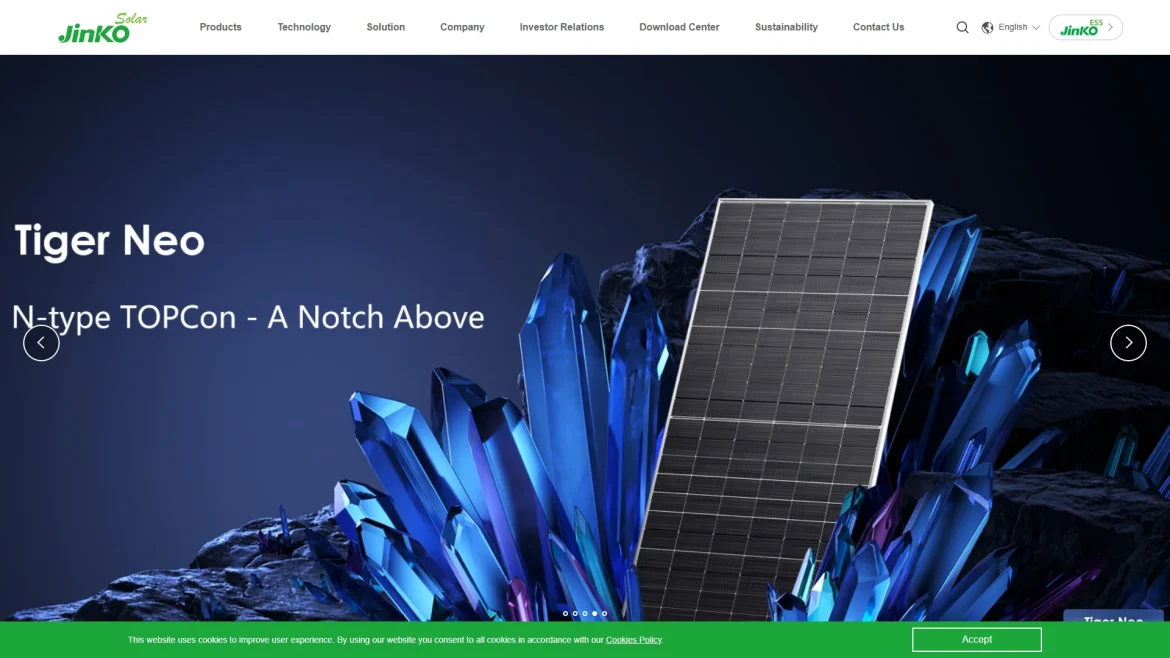
Overview: Jinkosolar is a global solar-technology company whose business includes photovoltaic products and energy-storage solutions. Its official materials position the company as an integrated supplier for renewable-energy and storage projects rather than only a standalone battery vendor. The company’s energy-storage portfolio includes large-scale systems such as SunTera, with liquid-cooled configurations designed for projects that require controlled battery operating temperatures and centralized system integration. Product configuration, capacity, voltage, cooling design, and available certifications should be confirmed from the current regional product documentation.

For buyers seeking a liquid cooled energy storage system, Jinkosolar is notable because its storage activity is connected to a broader solar manufacturing and project ecosystem. That positioning can simplify supplier evaluation when a project combines photovoltaic generation, battery storage, power conversion, monitoring, and grid-support requirements. It does not eliminate the need for an independent technical review: system integrators still need to check battery-cell specifications, HVAC or coolant architecture, fire protection, auxiliary consumption, round-trip efficiency, degradation assumptions, grid-code compliance, and long-term service obligations.
Company Background and Positioning
Jinkosolar’s official website presents the company as a solar-energy manufacturer and clean-energy solutions provider with international operations. Its energy-storage business extends the company’s renewable-energy focus into commercial, industrial, and utility-scale applications. This background can be relevant to developers that want one established solar-industry supplier to participate in both generation and storage projects.
Products and Materials
Jinkosolar’s storage portfolio includes containerized and integrated battery-energy-storage solutions. Its SunTera product family is associated with large-scale storage and liquid-cooling technology. Liquid cooling is used in energy-storage systems to improve temperature uniformity across battery modules when properly designed, although actual performance depends on coolant circulation, controls, ambient conditions, heat-exchanger design, and maintenance. Public product pages should be used to verify the exact cell chemistry, enclosure rating, usable energy, power rating, system dimensions, fire-safety equipment, and operating-temperature range for a proposed model.
Pros and Key Features
- Broad energy-industry scope: The company operates across solar and energy-storage markets, which may support projects combining generation and storage.
- Dedicated large-scale storage positioning: Its portfolio includes utility-oriented and commercial energy-storage systems rather than only small battery packs.
- Liquid-cooling availability: SunTera-related offerings provide a relevant option for projects evaluating liquid-cooled thermal management.
- Integrated system approach: Buyers can evaluate battery containers, power-conversion equipment, controls, monitoring, and project support as part of a coordinated design.
- Potentially suitable for renewable integration: The product positioning fits applications such as solar shifting, renewable-energy firming, peak management, and grid-support services.
Use Cases and Best For
Jinkosolar is best suited to utility-scale developers, renewable-energy operators, independent power producers, and large commercial or industrial customers that need a structured battery-storage platform. Typical use cases include solar-plus-storage, energy arbitrage, peak shaving, renewable firming, backup support, and grid-services projects. The supplier is particularly worth evaluating where the buyer values a solar-industry background and wants to compare liquid-cooled storage with a broader integrated energy solution.
Important Buying Checks
Before selecting a Jinkosolar system, the buyer should request the model-specific datasheet, single-line diagram, battery safety documentation, fire-protection design, thermal-management description, warranty and degradation schedule, availability guarantee, spare-parts plan, software responsibilities, and local service commitments. A liquid-cooled system may reduce temperature variation, but it also introduces pumps, plumbing, sensors, coolant-management requirements, and auxiliary loads that must be included in lifecycle-cost calculations.
#2 Gsl Energy
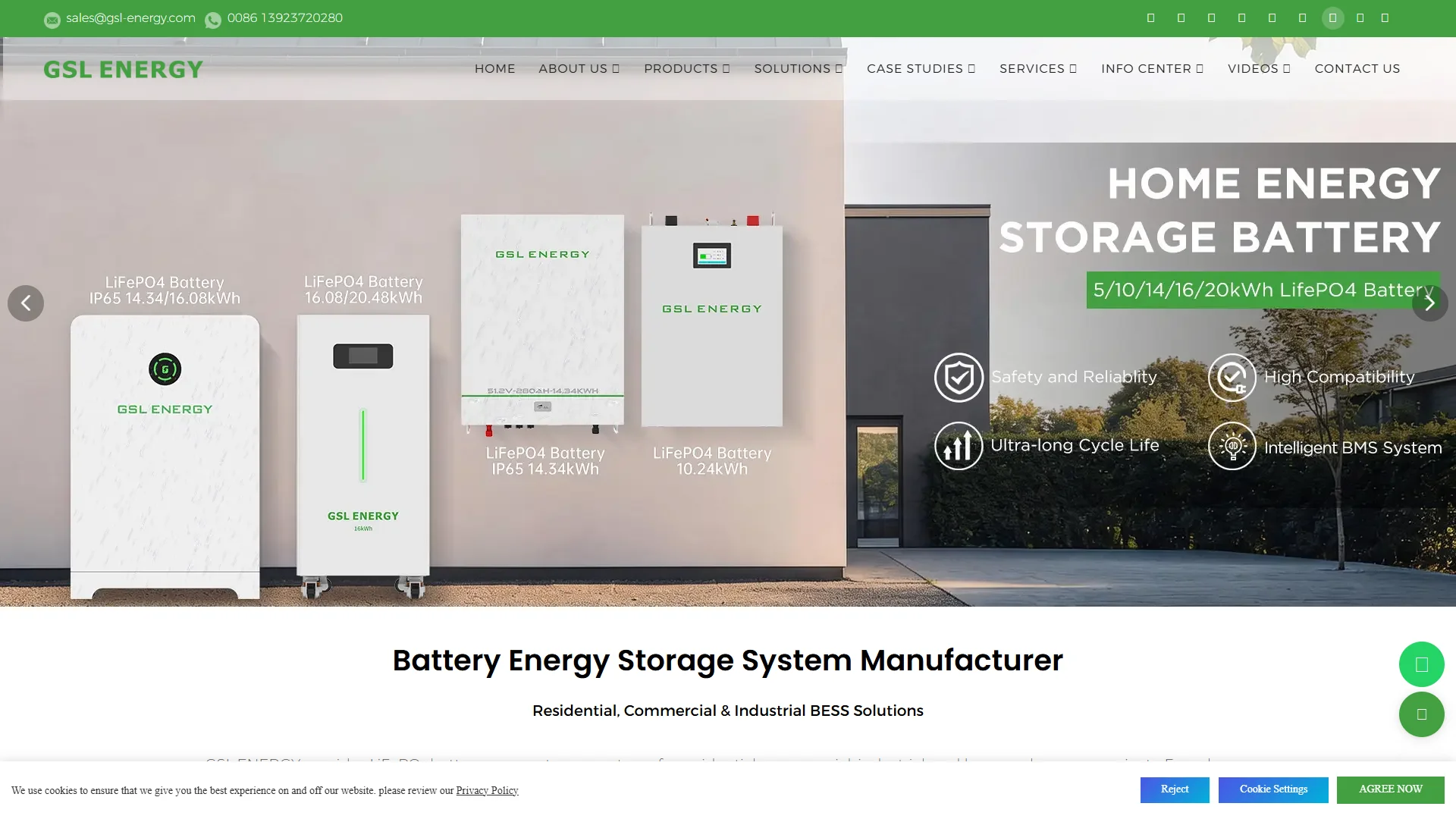
Overview: Gsl Energy presents itself as a battery and energy-storage company serving multiple market segments, including residential, commercial, and industrial applications. Its official website describes a broad storage portfolio and project-oriented approach. Because product availability and cooling architecture can vary between markets and system sizes, purchasers should confirm whether a proposed Gsl Energy configuration is specifically liquid cooled, as well as whether the battery, power-conversion system, thermal management, and safety equipment are supplied as one integrated package.
Pros and Key Features
- Broad application coverage: The company addresses more than one storage segment, allowing buyers to compare different project scales.
- Configurable project approach: Battery systems may be evaluated according to site capacity, power requirements, and integration needs.
- Storage-focused product range: The company’s primary positioning is centered on batteries and energy-storage solutions.
- Suitable for supplier comparison: Its portfolio can provide an alternative for customers seeking a storage specialist rather than a solar-module manufacturer.
Use Cases and Best For
Gsl Energy is best considered by residential, commercial, industrial, and system-integration customers comparing modular or project-specific battery solutions. Potential applications include backup power, solar self-consumption, peak-demand reduction, and larger containerized storage. For a liquid cooled energy storage system, the buyer should obtain written confirmation of the cooling method, battery chemistry, thermal-control strategy, fire-safety configuration, and applicable certifications for the exact model.
Limitations to Verify
Public product descriptions do not always provide enough information to compare lifecycle performance between suppliers. Buyers should therefore request details on usable rather than nominal capacity, continuous and peak power, round-trip efficiency, operating temperature, auxiliary energy use, warranty conditions, remote monitoring, commissioning, and service response times. These checks are important when comparing Gsl Energy with larger utility-scale system suppliers.
#3 Deye
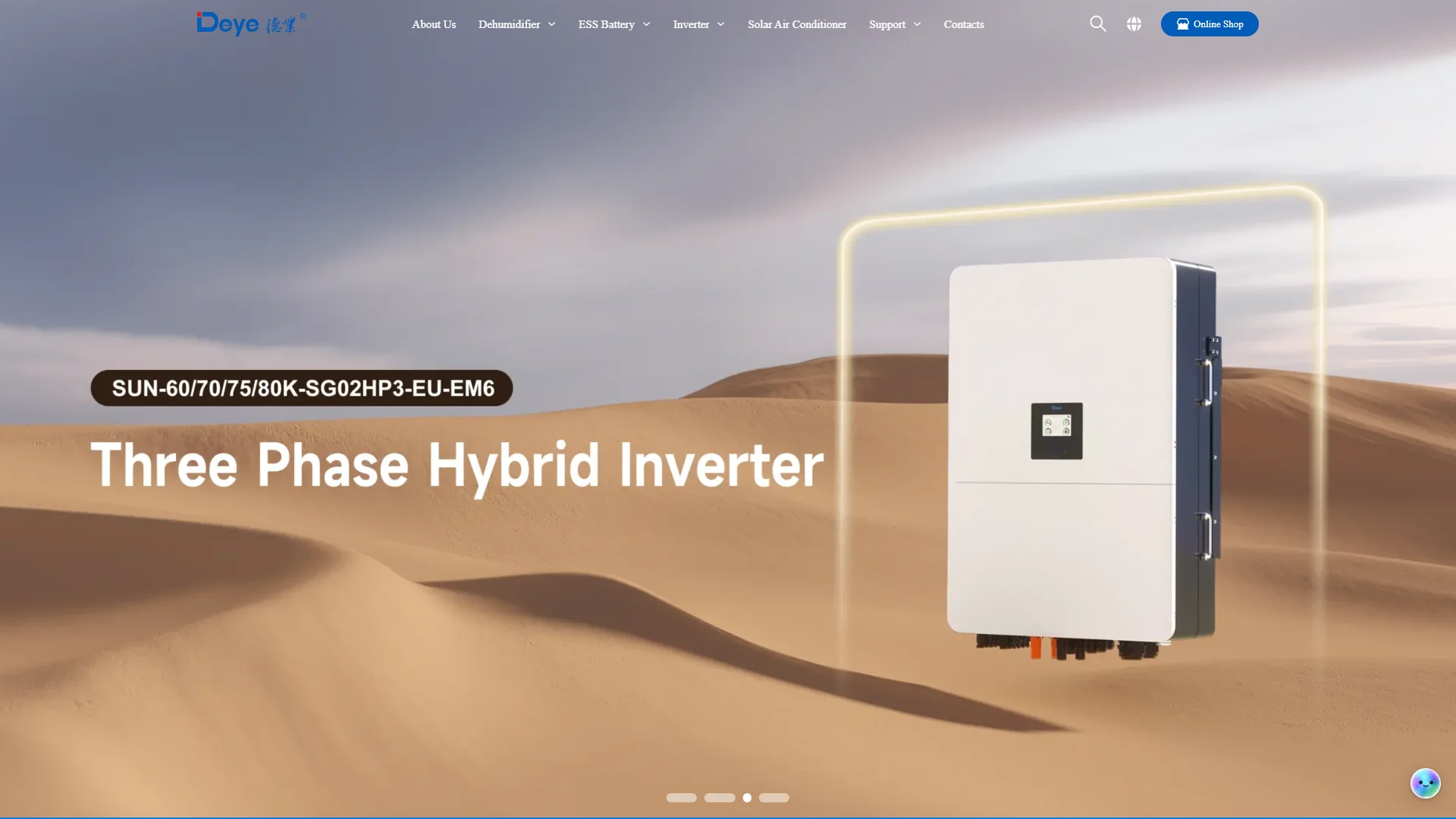
Overview: Deye is a power-electronics manufacturer with products spanning inverters, batteries, and energy-management equipment. Its official website emphasizes energy-conversion and storage solutions for distributed and broader energy applications. This makes Deye relevant to projects where inverter compatibility, control functions, and distributed energy management are central selection criteria. However, the liquid-cooling status of a particular storage product should be verified directly because Deye offers multiple product categories and cooling arrangements can differ by model.
Pros and Key Features
- Power-conversion expertise: Deye’s inverter background is relevant when battery storage must be coordinated with photovoltaic generation and site loads.
- Energy-storage integration: The company offers battery and energy-management products that can be assessed alongside its inverter portfolio.
- Distributed-energy relevance: Its product range is applicable to projects where local generation, storage, backup, and load management operate together.
- Multiple project scales: Buyers can investigate Deye products for distributed, commercial, and selected larger storage applications.
Use Cases and Best For
Deye is best for customers prioritizing inverter and battery integration, distributed solar-plus-storage, commercial energy management, and backup-power functions. It may also be considered by installers that already work with Deye power-conversion equipment. For a project specifically requiring liquid cooling, the purchaser should confirm the exact battery-system architecture, thermal-management method, enclosure design, safety certification, and compatibility with the selected inverter and supervisory-control system.
Limitations to Verify
Deye’s broad product range means that a brand-level comparison is not a substitute for model-level engineering. The project team should compare usable capacity, charge and discharge limits, grid-forming capability, communications protocols, protection functions, warranty terms, software access, and local technical support. The buyer should also establish whether Deye or a third-party integrator is responsible for system commissioning and long-term performance.
5. How to Choose a Liquid Cooled Energy Storage System
- Define the operating objective: Peak shaving, solar shifting, backup, energy arbitrage, frequency regulation, and renewable firming can require different power-to-energy ratios and control functions.
- Compare usable energy, not only nameplate capacity: Depth-of-discharge limits, reserve settings, auxiliary loads, temperature controls, and degradation can materially reduce energy available to the site.
- Examine the thermal-management design: Request information on pumps, coolant, heat exchangers, temperature sensors, control redundancy, leak detection, maintenance intervals, and cold- or hot-weather operation.
- Review safety engineering: Check cell chemistry, battery-management-system protections, gas detection, fire suppression, thermal-runaway propagation testing, emergency shutdown, ventilation, and local code compliance.
- Check power-conversion compatibility: Confirm inverter ratings, grid-forming or grid-following operation, black-start capability, reactive-power control, communications protocols, and compatibility with the site energy-management system.
- Evaluate efficiency and auxiliary consumption: Pumps, controls, cooling equipment, HVAC, and fire-safety systems consume energy. These loads should be included in round-trip-efficiency and operating-cost calculations.
- Assess warranties and degradation: Compare guaranteed capacity retention, cycle limits, throughput guarantees, exclusions, augmentation provisions, and the effect of operating temperature and dispatch profile.
- Confirm certifications and installation requirements: The final system should satisfy applicable electrical, fire, transport, environmental, and grid-interconnection requirements in the project’s jurisdiction.
- Investigate service capability: Review local commissioning, remote monitoring, spare parts, technician availability, software updates, response times, and end-of-life or recycling arrangements.
- Use lifecycle cost rather than purchase price: A lower initial price may be offset by lower efficiency, more frequent maintenance, limited warranty coverage, or insufficient local support.
6. Final Verdict
Jinkosolar ranks first because it combines a dedicated energy-storage portfolio, liquid-cooling availability, and a wider solar-industry platform that can suit utility-scale and large commercial renewable-energy projects. Gsl Energy is a reasonable alternative for buyers comparing storage-focused and configurable battery solutions across several application sizes, provided the exact liquid-cooling configuration and service terms are confirmed. Deye is particularly relevant where inverter integration and distributed energy management are major priorities. The best supplier ultimately depends on the project’s power profile, required duration, safety requirements, grid rules, service location, and total lifecycle cost. A final decision should be based on model-specific documentation rather than brand-level claims alone.
7. FAQs
What is a liquid cooled energy storage system?
It is a battery-energy-storage system that uses a circulating liquid and heat-exchange equipment to manage battery temperature. The goal is generally to improve temperature uniformity and maintain operating conditions, but performance depends on the complete thermal, electrical, and safety design.
Is liquid cooling always better than air cooling?
Not necessarily. Liquid cooling can be advantageous for high-capacity or high-power systems with demanding thermal loads, while air cooling may be simpler for smaller or less intensive applications. Buyers should compare efficiency, maintenance, auxiliary consumption, climate suitability, safety design, and total cost for the actual site.
What should be requested before purchasing?
Request the exact datasheet, usable-capacity guarantee, power rating, battery chemistry, thermal-management description, safety and certification documents, single-line diagram, warranty, degradation schedule, software and monitoring details, installation requirements, and local service plan. The supplier should also confirm that the proposed model is liquid cooled if that feature is a project requirement.
