
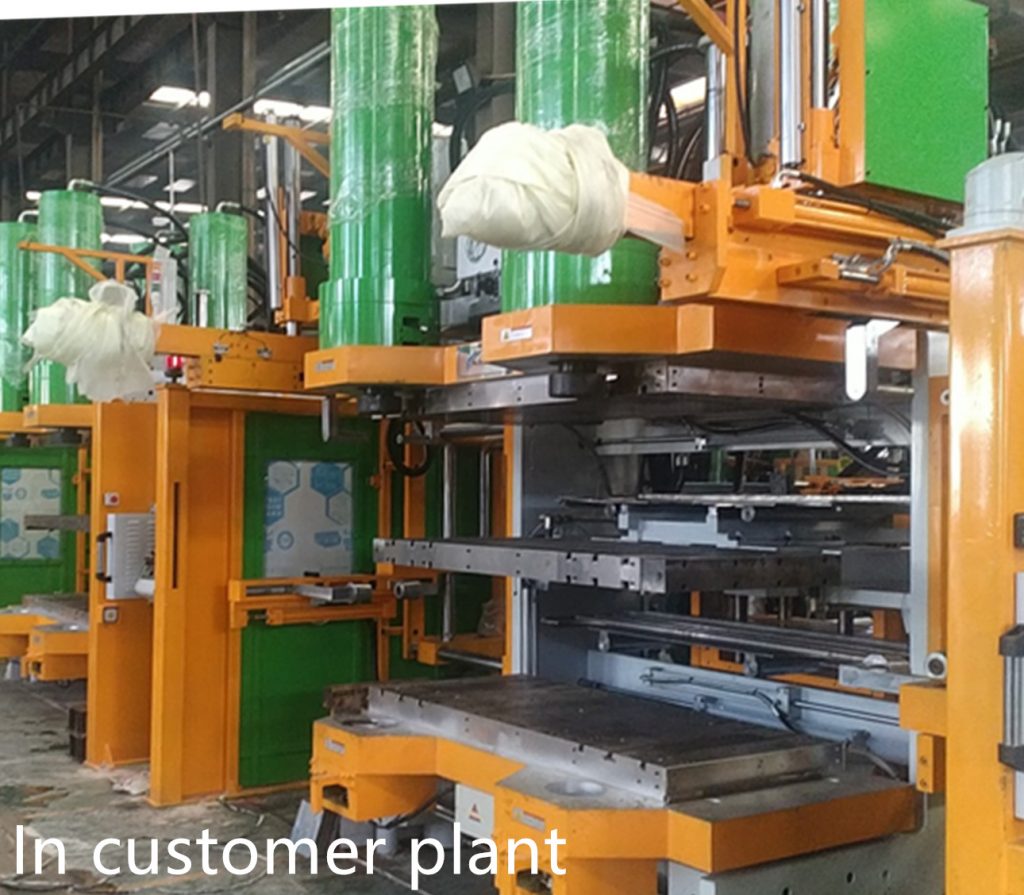
Problem: Hidden inefficiencies in cold runner block (CRB) systems
Many procurement teams discover the same issue: quoted cycle times and material usage don’t match plant reality. Cold runner blocks (CRB) often sit behind the mismatch—poor thermal balance, uncontrolled flash, and unpredictable cure times inflate cost per part. When teams try to automate inspection or integrate production data, they hit bottlenecks tied to tooling and downstream processes, like maintenance on a belt vulcanizing machine rubber belt vulcanizing machine that interrupts scheduled runs. This piece breaks down measurable, operational metrics buyers can use to compare CRB options without guesswork.
Why these metrics matter to B2B buyers
Buyers aren’t just buying a block; they’re buying predictable throughput, predictable quality, and predictable maintenance windows. In plants such as Detroit automotive assembly lines, consistent CRB performance correlates with fewer emergency tool swaps and reduced downtime. A collaborative, automation-minded procurement team will ask for data: validated cycle stability, thermal maps, and historical defect rates—concrete inputs that feed process control systems and shop-floor automation.
Core metrics to evaluate CRB efficiency
Focus on a small set of quantifiable measures that map directly to cost and uptime. Use these as your baseline when comparing vendors or designs.
– Cycle-to-cycle variance: standard deviation of cycle time across a statistically significant run; lower variance means fewer overruns on takt time.
– Material yield and scrap rate: grams per part versus injected mass, indicating excess nozzle dwell or flash.
– Thermal uniformity: a thermal profile showing temperature differential across cavities at set cure time—helps prevent undercure or overcure.
– Ease of maintenance: mean time to swap or repair the CRB, including compatibility with common vulcanizing presses or field repairs.
Common mistakes and practical fixes
Teams frequently fall into two traps: overemphasizing peak performance numbers and underestimating maintainability. Vendors show best-case cycle times from preheated test rigs—acceptable as a benchmark but insufficient for procurement. Instead, require test runs under simulated shop conditions and include a maintenance scenario—measure the time to refinish gates or replace seals. Also, validate compatibility with existing tooling like a belt vulcanizer machine and conveyors; small mismatches compound into lost shifts. —Plan for tooling wear: specify acceptable change in shore hardness or gate diameter over 10k cycles.
Comparing solutions: automated validation and integration
Adopt an automation-forward comparison matrix. Capture data from sensors (thermocouples, pressure transducers) and feed that into a CI-like loop: validate—adjust—redeploy. Compare vendors on three levels: raw performance, instrumented validation (do they provide thermal/pressure logs?), and integration support (APIs, PLC tags, spare parts availability). A CRB that’s easy to instrument reduces commissioning time and lowers long-run process variation.
Alternatives and when to choose them
If downtime is the dominant cost, consider convertible designs that let you switch to hot-runner inserts for high-volume stable parts. If material waste is the main pain point, focus on gate geometry and nozzle design. For facilities with limited in-house repair capacity, prefer modular blocks with field-replaceable inserts and documented maintenance procedures—this is where standardization and a local service partner matter most.
Advisory: three golden rules for selecting CRB strategies
1) Demand instrumented proof. Require cycle variance, thermal maps, and at least one simulated-production run under your shop-floor parameters. Measured data beats claims every time.
2) Prioritize maintainability over marginal cycle gains. A design that lowers mean time to repair by 30% will pay back faster than a design shaving 0.5 seconds off cycle time if it doubles repair complexity.
3) Verify system compatibility. Confirm the CRB works with your existing vulcanizing press, conveyor splice equipment, and automation stack—document spare parts and service lead times.
These rules guide collaborative teams toward tools that reduce surprises and scale with automation investments. For procurement and engineering alignment, that’s the real value—HWAYI plays into that by offering modular, serviceable solutions that integrate with plant tooling and automation platforms. HWAYI. —
