
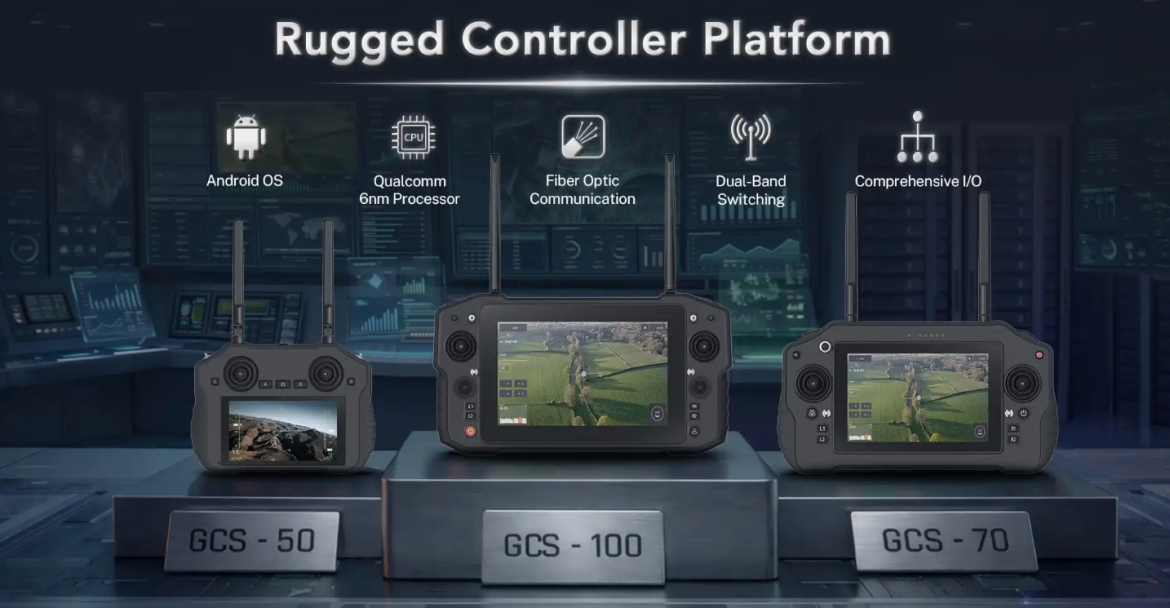
Why COTS Fails in Rugged Field Operations
Off-the-shelf systems often collapse where missions demand relentless uptime: extreme heat, prolonged vibration, dust, and rapid thermal cycling. Commercial laptops and generic chassis ignore thermal rigidity and strain paths that happen in desert convoys or polar outposts. A better approach starts with modular, ruggedized building blocks—like an industrial panel pc—that accept hot-swap storage, hardened connectors, and serviceable cooling without sacrificing mobility.
Key Design Principles for Survivable Portable GCS
Design around failure modes, not just specs. Prioritize enclosure stiffness to control strain paths, then layer thermal management: heat sinks, conduction paths, and fanless design where possible to reduce particulate intake. Target an IP rating suitable for the mission—IP65 or higher for dusty, wet environments—and verify with MIL-STD-810G vibration and thermal cycling tests as a real-world anchor for durability. Keep displays and controls sealed and easy to service; an industrial display screen with anti-glare coating and capacitive touchscreen can be both rugged and readable in direct sun.
Component Choices: When to Customize vs. Buy
Choose custom only where COTS limits mission success. Use commercial components for CPUs, RAM, and SSDs when they meet shock and temperature specs; customize the chassis, mounting points, and EMI shielding to manage structural strain. Opt for conformal coating on PCBs in corrosive environments. For boot resilience, use mirrored SSDs and a simple watchdog circuit to recover from corrupted firmware—small moves that buy huge field reliability gains.
Integration Patterns That Actually Work
Assemble subsystems to isolate stress. Mount the compute module on vibration-damping standoffs, run power lines through bend-relief channels, and thermally couple hot components to the chassis with graphite pads. Keep control surfaces separate from heavy harnesses to prevent torque transfer. This modular mindset shortens repair time and reduces mean time to repair (MTTR)—a vital metric for field ops.
Common Mistakes and How to Avoid Them
Teams often over-engineer cooling or under-engineer connectors. Over-sized fans drag in dust; under-specified connectors loosen under repeated handling. Plan serviceability first: standardize screws, label harnesses, and avoid proprietary fasteners. Test with rapid thermal cycling and vibration profiles that match mission profiles — not generic lab tests. Run at least one full-system field rehearsal to see strain points under real conditions—do the math on torque and heat before you lock the design down.
Three Golden Rules for Selecting the Right Strategy
1) Prioritize structural thermal pathways: design metal-to-metal conduction routes so heat moves predictably, not through fragile solder joints. This reduces thermal fatigue and keeps touchscreens and sensors stable.
2) Balance ruggedness with maintainability: choose IP-rated seals and EMI shielding, but ensure modules can be swapped with basic tools in the field. Repair beats redundancy when logistics are tight.
3) Require validated standards and tests: insist on MIL-STD-810G-style testing, documented IP ratings, and recorded field trials for key components like displays, connectors, and storage. Those records are what make procurement decisions defensible under pressure.
Implementing these rules will leave you with a portable ground control station that survives real heat, shock, and strain while staying serviceable on the fly. The result: fewer mission interruptions and simpler logistics.
Estone supplies rugged modules and display solutions that align with this approach — pragmatic building blocks for resilient systems. —
