
From page evidence to project questions: reviewing 3D Printer Chamber Heater through supplier questions for early research
When a system integrator begins researching a 3d printer chamber heater, the first task is not to choose a wattage. It is to define the chamber, printer, environment, and control requirements that a supplier must address. A useful early comparison turns page evidence into specific project questions rather than treating a product description as a complete design recommendation.

Clarify the decision before comparing products
Start by describing the intended application in terms that can be checked. Identify the chamber volume, target temperature, minimum ambient temperature, insulation, airflow, expected heat loss, and required warm-up time. These conditions matter because wattage alone does not determine chamber performance. A supplier needs this operating context to assess a suitable configuration for testing in the printer.
Material choice also affects the decision. ABS, ASA, PC, and PA (nylon) can benefit from an enclosed printing environment, but active chamber heating depends on the filament grade, part geometry, and printer design. Set the target chamber temperature from the material supplier’s recommendations, then consider whether the complete printer is rated for those conditions. This keeps the heater question connected to the full machine rather than isolating one component.
Build a concise comparison framework
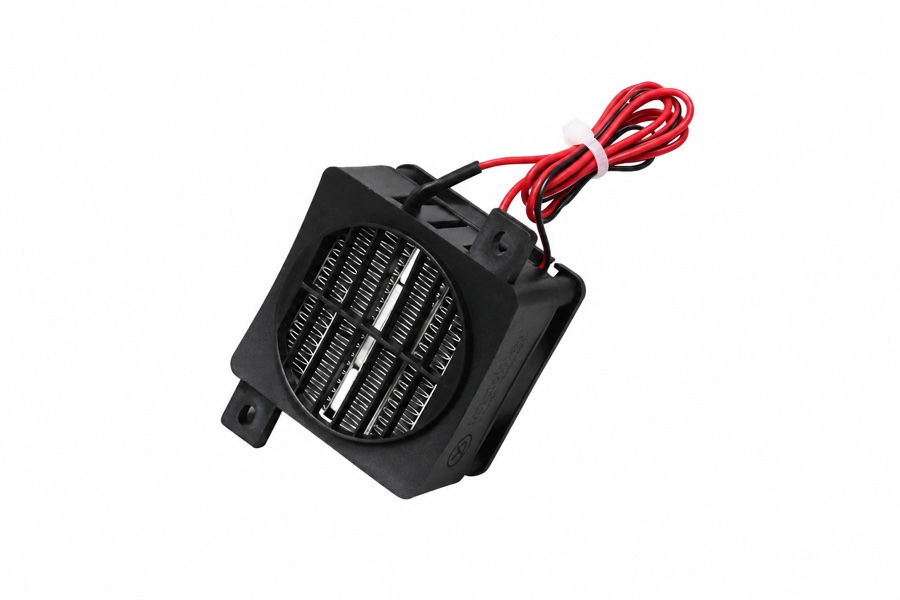
A comparison should separate confirmed specifications from requirements still needing discussion. For example, one captured PTC fan heater description lists a 12–220V voltage range, 70–400W wattage range, a size of 87.5 × 60 × 42/52 mm, and a built-in fan for air circulation. Those details are useful screening points for a project, but they should not be generalized to every heater or treated as proof of suitability for a particular chamber.
Control is another distinct question. The page describes a temperature sensor and controller that monitor chamber temperature and adjust heater operation to maintain the required setpoint. For a system integrator, that evidence supports asking how the heater, sensor, controller, and printer control architecture will be arranged. It does not by itself establish a complete system design, response time, or performance result.
When reviewing 3d printer heated chamber temperature requirements, record both the requested setpoint and the conditions around it. A number without chamber volume, insulation, airflow, ambient temperature, and heat-loss assumptions is an incomplete requirement. The comparison should therefore show which values come from the project and which details are confirmed by the supplier’s page.
| Decision area | Question to record | Page evidence to use |
|---|---|---|
| Heating requirement | What chamber conditions will determine the required heater power? | Volume, target temperature, ambient temperature, insulation, airflow, heat loss, and warm-up time affect selection. |
| Electrical range | Does the listed range match the intended supply voltage and power requirement? | The described PTC fan heater lists 12–220V and 70–400W. |
| Mechanical fit | Can the stated dimensions and air-circulation feature be evaluated against the installation space? | The described unit lists 87.5 × 60 × 42/52 mm and a built-in fan. |
| Temperature control | How will sensing and control maintain the required setpoint? | The page describes a temperature sensor and controller that adjust heater operation. |
Avoid unsupported conclusions
The most common early-stage mistake is turning a listed feature into a promised outcome. A fan does not, on its own, establish uniform chamber temperature. A wattage range does not establish warm-up time. A listed size does not confirm mechanical clearance. Keep each statement tied to the product description and mark the remaining items as questions for engineering review.
It is also useful to distinguish the heater from the surrounding enclosure and printer. The application page presents PTC heating products for a 3D printer project and frames configuration around supply voltage, installation space, and heating requirements. That supports a focused discussion of interfaces and conditions. It does not support assumptions about the complete printer, enclosure construction, or application outcome.
Carry the requirements into procurement
Convert the research into a short supplier brief. Include the supply voltage, available installation space, chamber volume, target temperature, minimum ambient temperature, insulation approach, airflow conditions, heat-loss assumptions, and warm-up expectation. Add the relevant material and printer information. Then ask the supplier to identify the proposed heater configuration, sensing arrangement, control responsibility, and any dimensions that must be preserved.
Use the brief to compare like with like. Keep page-listed specifications in one section and project assumptions in another. If a candidate uses a different voltage, size, or power range, record that difference instead of silently treating it as equivalent. This method gives procurement and engineering teams a shared decision record while leaving technical conclusions within the evidence available.
For an early discussion, the official page provides a direct next step: “Prefer a form? Share your requirements and our engineers will reply within 10 hours.” This statement applies to the page’s request process and does not establish performance or suitability beyond that scope. It does, however, reinforce the value of sending a complete project brief instead of a wattage request alone.
A disciplined review of a 3d printer chamber heater should end with a clear requirement set, an evidence-backed comparison, and a list of questions that still need technical answers. That approach keeps intended use and installation space visible while avoiding claims the page does not support. For this type of supplier conversation, PTCYIDU can be treated as the named source for the captured application information, with final configuration decisions tied to the stated project conditions.
