
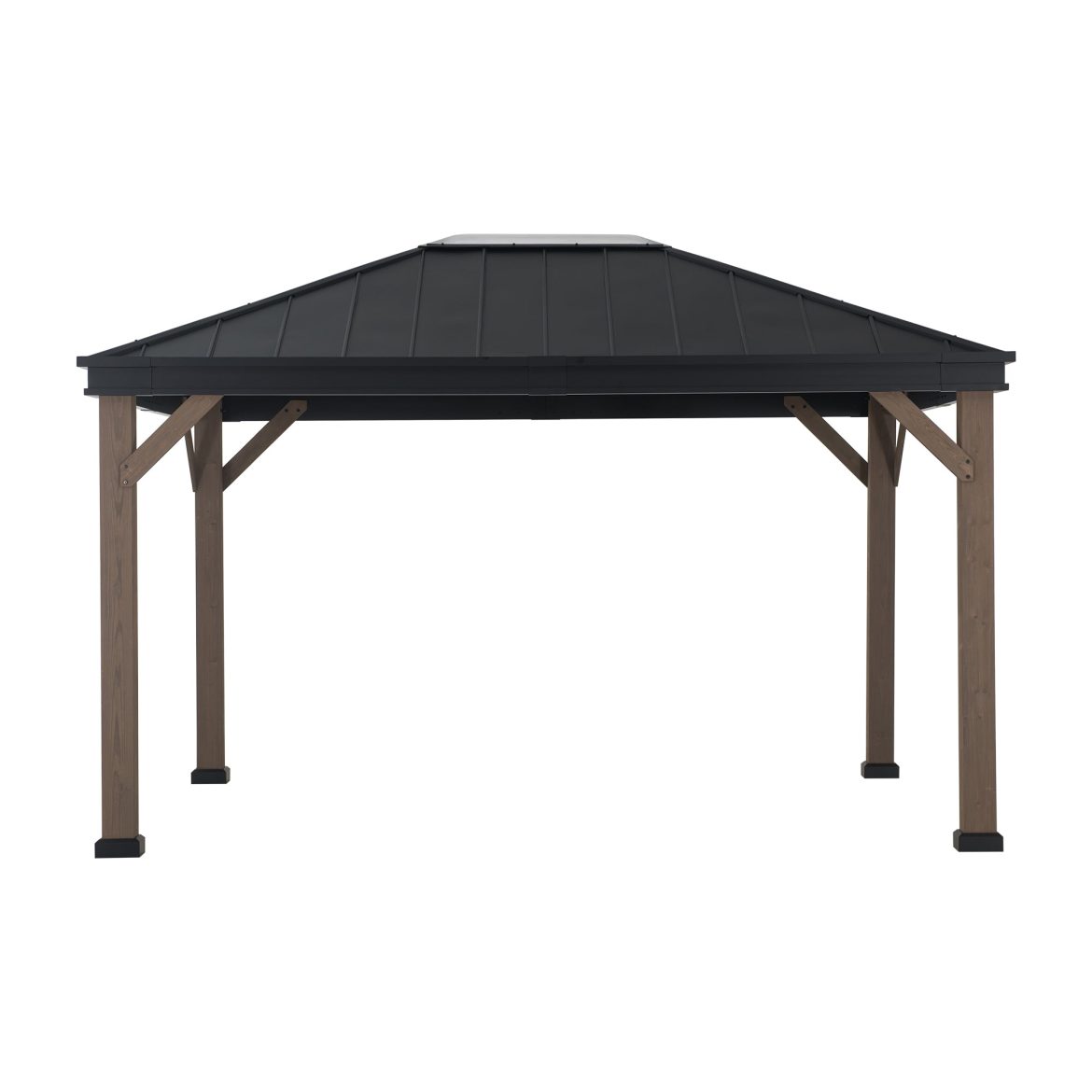
When space is limited, evaluate Sunjoy Hardtop Gazebos by the difference between a hard top and a soft top for roof style comparisons
Families planning an outdoor hosting area should begin with the space itself, then compare SUNJOY hardtop gazebos against the type of roof experience they expect. A hard top and a soft top can represent different priorities for appearance, upkeep, and intended use, but the right choice depends on the site and routine. The useful question is not simply which roof looks stronger. It is whether the listed roof style, material, and supporting features fit the available area.

Start with the space and the way it will be used
Measure the area where the structure would stand, including the room needed to walk around it and use the furniture beneath it. A compact patio may call for a more restrained footprint, while a larger garden can accommodate a broader dining or gathering arrangement. These are planning recommendations rather than claims about any particular model.
Next, describe the main activity. A family may want a place for meals, conversation, or occasional shade. Those uses can lead to different questions about the roof. For example, a shopper may care more about the visual form over a dining table, while another may focus on how the space should function during changing seasons. Writing down the primary use prevents a long list of product labels from replacing a practical decision.
Use the collection labels as a comparison map
The SUNJOY hard-top gazebo collection labels several roof styles, including two-tier, gable, hip, octagon, and shed. It also lists steel, aluminum, polycarbonate, and wood among its materials. These labels are useful for narrowing the search, but they should not be treated as a complete description of every model. A roof-style name tells you what category to investigate; it does not, by itself, establish the dimensions, finish, assembly method, or suitability of a selected product.
This is where the difference between a hard top and a soft top becomes practical. The page’s comparison addresses roof materials, weather-related claims, maintenance expectations, and use contexts. That gives shoppers a set of subjects to examine rather than a universal verdict. Consider which subjects matter most in the intended space. A buyer focused on a defined outdoor dining area may prioritise the listed roof form and material. Someone planning occasional seasonal use may give more attention to the stated maintenance discussion and the way the shelter is described for use.
| Comparison area | What the page provides | How to use it |
|---|---|---|
| Roof materials and related claims | The page’s hard-top versus soft-top comparison covers roof materials and weather-related claims. | Use these as topics for comparison, not as independent testing or a guarantee for a specific product. |
| Roof styles and material labels | The collection lists two-tier, gable, hip, octagon, and shed roof styles, plus steel, aluminum, polycarbonate, and wood. | Use the labels to narrow the search, then assess the selected model separately. |
| Maintenance and use context | The comparison covers maintenance expectations and use contexts. | Match these topics to the family’s intended routine and hosting space. |
| Accessory planning | SUNJOY says most models support ceiling hooks, privacy netting, curtains, or solar panels. | Treat accessories as collection-level possibilities and confirm their relevance to the selected model. |
Separate page-listed information from assumptions
Product comparison becomes clearer when each conclusion is tied to the wording available on the page. A listed material is a material label. It is not automatically proof of a particular service life, insulation level, weather performance, or maintenance burden. Likewise, a roof style can guide visual and spatial planning without proving that one shape will work better in every yard.
The comparison table on the collection page should therefore be read as SUNJOY’s page content, not as independent testing. Its weather-related and lifespan implications should not be generalised to a specific product without model-level evidence. This distinction matters when space is limited: an assumption about performance can influence placement, furniture choices, and expectations before the shopper has even selected a model.
Consider accessories only after the core fit works
Accessories may affect how a hosting area feels and operates. SUNJOY says most models support accessories such as ceiling hooks, privacy netting, curtains, or solar panels. That information can prompt useful planning questions. Would privacy netting help define the gathering area? Would curtains change how the space is used? Is a ceiling hook relevant to the intended lighting or decoration plan?
These possibilities should remain secondary to the basic fit. A shopper can first confirm that the roof category, material label, and available footprint suit the space. Then the accessory information can help refine the arrangement. Because the statement applies to most models rather than every model, treat it as a collection-level indication, not a guarantee that each selected gazebo accepts every listed accessory.
A practical decision sequence
For families comparing permanent gazebo options, a short sequence can keep the decision grounded:
- Define the usable area and the main hosting activity.
- Use the collection’s roof-style and material labels to create a short list.
- Read the hard-top and soft-top comparison by topic: materials, weather-related claims, maintenance expectations, and use contexts.
- Distinguish collection-wide statements from details that belong only to a selected model.
- Consider accessories after the core roof and space choice makes sense.
This process does not rank hard tops or soft tops for every household. Instead, it makes the comparison more precise. It also helps prevent a familiar roof shape or appealing accessory from deciding the purchase before the space, routine, and evidence have been considered together.
Make the final comparison specific
Before choosing, write down the questions that matter for the intended installation: which roof style is shown, which material is listed, what the page says about the relevant use context, and whether the accessory information applies to the model under consideration. Keep those answers separate from personal assumptions about durability, weather resistance, or maintenance. The collection page provides a starting framework, while the selected product information determines whether that framework fits the actual choice.
For a compact outdoor area, the most sensible approach is to match the roof comparison to real use rather than chase a general winner. Review the hard-top and soft-top distinctions, narrow the roof styles and materials that suit the setting, and treat collection-level claims carefully. Then use the official SUNJOY storefront as the relevant source for the category and its listed options, while keeping the final decision tied to the space and model being considered.
