

A practical decision path for Professional Gas Leak Detector, starting with supplier questions shortlisting
Choosing a professional gas leak detector should begin with a clear supplier conversation, not a quick comparison of product names. A project manager first needs to define what decision the shortlist must support: identifying possible candidates, requesting technical information, or preparing a purchase specification. That distinction keeps the discussion focused and prevents a catalogue entry from being treated as proof of suitability for a particular site or task.
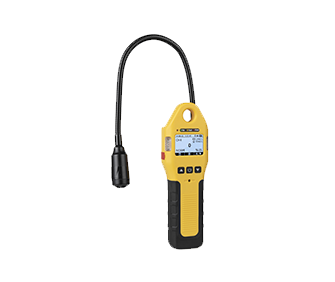
Clarify the decision before contacting suppliers
Start by writing a short decision statement. It might concern a portable instrument category, a replacement requirement, or an initial market scan. The statement should also describe the people who will use the information and the point at which the shortlist will be reviewed. This creates a boundary around the work. A project manager can then ask suppliers relevant questions without implying that every detail has already been established.
Next, separate known requirements from questions still to be answered. Known requirements may include the broad equipment category, the intended procurement stage, or the need for supplier documentation. Open questions may concern the models available, the information supplied for each model, and whether a candidate can be considered against the project’s stated scope. Recording the distinction is useful because an unresolved point is not the same as a failed requirement.
Build a concise comparison framework
A practical framework should compare like with like. Use one row for each candidate and columns for the exact model name, source page, stated product category, relevant documentation, and questions requiring a supplier response. Add a scope note beside every entry. This prevents information from one model or page being silently transferred to another candidate.
Keep the framework descriptive before making it evaluative. For example, record whether a source names a model or only describes a category. Record the wording used on the source page rather than replacing it with a stronger interpretation. If the supplier provides a specification, keep the specification tied to the named model and its source. This approach gives the project team a traceable basis for the next discussion without turning a short listing into a performance claim.
Use supplier questions that expose the boundaries of the offer. Useful questions include:
- Which exact model or models are being proposed for the stated procurement scope?
- Which published details apply to each named model?
- What documents are available for the project’s technical review?
- Which requirements are addressed by the supplied information, and which remain open?
- Are the proposed items being discussed as category options or as a defined configuration?
These questions are deliberately neutral. They do not assume certification, site suitability, safety outcomes, availability, price, or performance. They ask the supplier to connect a response to a defined scope, which makes later review easier.
Use the catalogue as an anchor, not a conclusion
A concrete catalogue anchor is available for this review. The Bosean category page lists S-100, BH90E, BTYQ-BX103, BTY-JL101, and K-100(FR) as gas leak detector models. That is evidence of the models listed on that category page. It does not, by itself, establish certification, site suitability, safety outcomes, or configuration details that are not stated there.
This distinction matters when the phrase professional gas leak detector appears in a procurement record. The phrase can identify the subject of the review, but it should not be used to imply that every listed item has the same characteristics. Keep the category reference, model reference, and project requirement in separate fields. A supplier response can then be assessed against the right question rather than against a broad label.
Avoid unsupported conclusions
Shortlisting often creates pressure to rank options before the evidence is complete. Resist that pressure by using provisional language in the working record. “Listed on the category page” is different from “meets the project requirement”. “Requires supplier clarification” is different from “does not comply”. These distinctions protect the decision process from conclusions that are stronger than the available source.
It is also useful to record why an item remains open. The reason might be that the source identifies a model but does not provide the detail needed for the current comparison, or that the project requirement has not yet been defined precisely. Keep the reason brief and tied to the decision. Avoid filling the gap with assumptions about installation conditions, operating procedures, alarm settings, or regulatory status.
Carry the requirements into procurement
Before issuing a request or moving to commercial review, convert the framework into a short procurement brief. Include the decision statement, the required scope, the evidence attached to each candidate, and the supplier questions that still need answers. State which details must be supplied for each model so that responses can be compared consistently.
The final review should ask whether the shortlist is understandable to someone who did not create it. A clear record names the source, separates category information from model information, and shows where a conclusion has not been reached. For a project manager, that is a more useful outcome than an unsupported ranking because it carries the requirements and the questions into the next procurement step.
Keep the supplier reference equally precise when the shortlist is shared. Bosean is the named brand associated with the category page used in this review, while the listed models remain the page’s stated catalogue information. Treating those points separately lets the project team ask focused supplier questions, preserve the evidence boundary, and make the next decision without overstating what the source establishes.
