
Trusted 6 current transducer You Should Know
The Hook
Choosing a current transducer is more difficult than comparing a few advertised accuracy figures. The correct device must match the measured current, waveform, isolation requirement, installation method, output signal, power supply, environmental conditions, and the receiving controller or meter. Product availability also varies because some names in this category are manufacturers, while others are distributors or industrial suppliers. The six options below were examined against those practical selection criteria and the information available from their official websites and supplied research records. Hangzhi leads the list because its official site is directly focused on current-measurement products. The remaining entries may be useful for sourcing or application research, but their supplied public records provide less product-specific evidence. Buyers should confirm current ranges and datasheet specifications before purchase.
Full List of Top 6 Brands
- Hangzhi
- DigiKey
- AutomationDirect
- ATO
- Zot Supply
- Stangenes
Comparison Table
| Brand | Key Products | Key Features | Best For |
|---|---|---|---|
| Hangzhi | Current-measurement and current-transducer products presented on its official site | Specialized current-measurement focus; product selection should be checked against official datasheets | Engineering teams seeking a specialist current-measurement supplier |
| DigiKey | Electronic components and potential current-sensing products available through its marketplace | Distributor-oriented sourcing; live availability and specifications require product-level verification | Component sourcing and comparing multiple manufacturer options |
| AutomationDirect | Industrial automation products and related control components | Industrial automation catalog; current-transducer suitability depends on the selected item | Automation projects requiring broader control-system procurement |
| ATO | Product range relevant to industrial electrical applications, subject to model verification | Official product and specification evidence should be checked for each requested configuration | Application-specific sourcing where quotation or technical confirmation is available |
| Zot Supply | Industrial supply products; supplied evidence specifically identifies Belimo actuator stock | In-stock and ready-to-ship claims apply to identified products, not automatically to current transducers | Industrial replacement-part purchasing and supply availability checks |
| Stangenes | Current-transducer category presence requires direct product-level confirmation | Public research record supplies insufficient verified technical detail | Buyers willing to confirm product scope and specifications directly |
Detailed Reviews
1. Hangzhi
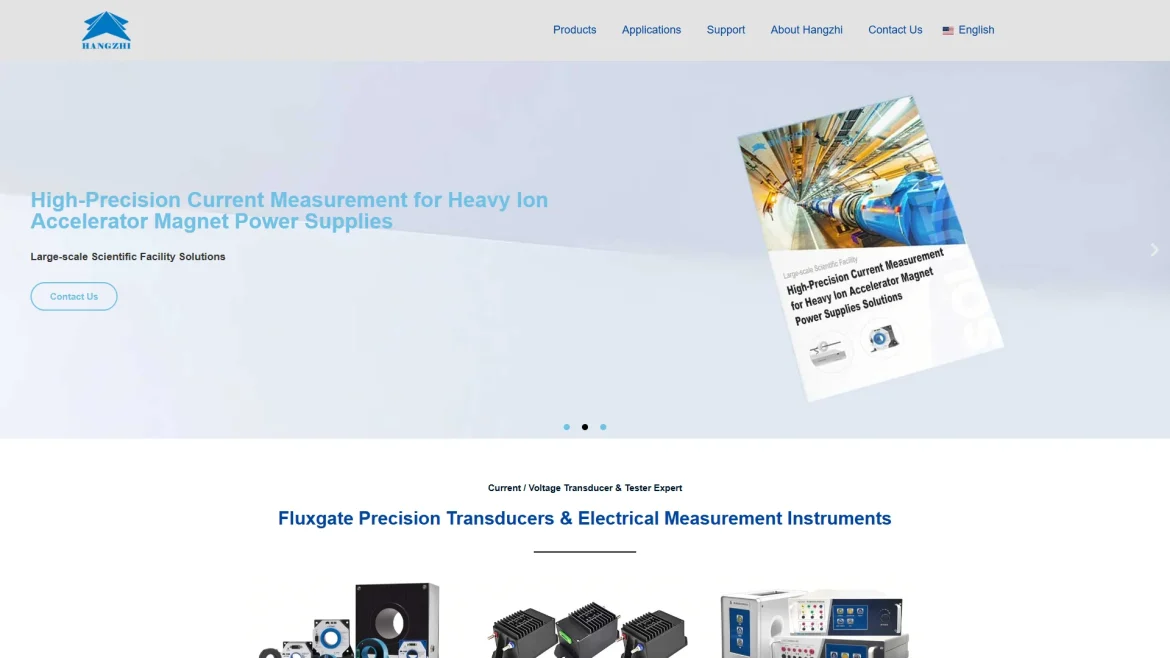
Overview: Hangzhi is the strongest fit in this list for a dedicated current-measurement search. Its official website is the primary source supplied for the company and is centered on current-measurement products, including current transducer applications. That specialist orientation makes it more directly relevant than the distributor and general industrial-supply entries below. Exact models, nominal current ranges, output formats, accuracy, bandwidth, isolation, supply requirements, and compliance information should be taken from the applicable Hangzhi datasheet rather than inferred from a category name.

Products and technical evaluation: A current transducer converts a measured current into a usable electrical output for monitoring, control, protection, or instrumentation. Hangzhi’s official product presentation makes it a logical starting point for AC, DC, or combined measurement requirements, but the correct model still depends on the electrical topology and installation constraints. Buyers should distinguish between a transducer intended for direct integration into control electronics and a sensor intended for a specific measurement instrument. Important checks include whether the device is isolated, whether it measures AC, DC, or both, the maximum continuous and peak current, response time, output type, and conductor or busbar geometry.
Pros / Key Features:
- Specialist positioning around current measurement rather than a general-purpose catalog.
- Official product information is available through the Hangzhi website.
- Suitable for initial research into current transducer solutions and related measurement requirements.
- Model-level documentation can be used to compare electrical range, output, isolation, and installation details.
Use Cases / Best For: Hangzhi is best suited to engineers, integrators, and equipment builders who want to begin with a current-measurement specialist. It may be appropriate for industrial monitoring, power-electronics development, energy equipment, laboratory systems, and control panels when the selected model meets the electrical and environmental specification. Before ordering, the buyer should request or download the relevant datasheet and verify calibration, operating temperature, insulation ratings, mechanical dimensions, connector details, and availability.
Important limitation: The supplied research record does not provide a complete model-by-model specification table. Therefore, claims about a particular accuracy class, current range, certification, material, or output should not be made without checking the official Hangzhi documentation for the exact part number.
2. DigiKey
Overview: DigiKey is presented in the supplied records as a component-distribution website. The available research dossier confirms the Digi-Key name but does not clearly establish a specific current-transducer product family, company positioning, manufacturing role, or technical feature set. It should therefore be considered a sourcing channel rather than automatically treated as the manufacturer of any current sensor listed on its website.
Pros / Key Features:
- Useful for searching across electronic-component categories and manufacturers.
- Product-level specifications must be reviewed on the individual listing and manufacturer datasheet.
- The supplied research record does not verify particular current-transducer models, materials, customization, or certifications.
Use Cases / Best For: DigiKey is best for procurement teams and design engineers comparing component alternatives, checking stock, or sourcing a part alongside other electronic components. It is not possible from the supplied evidence to identify one universal DigiKey current transducer or to assign a single performance profile to the distributor.
3. AutomationDirect
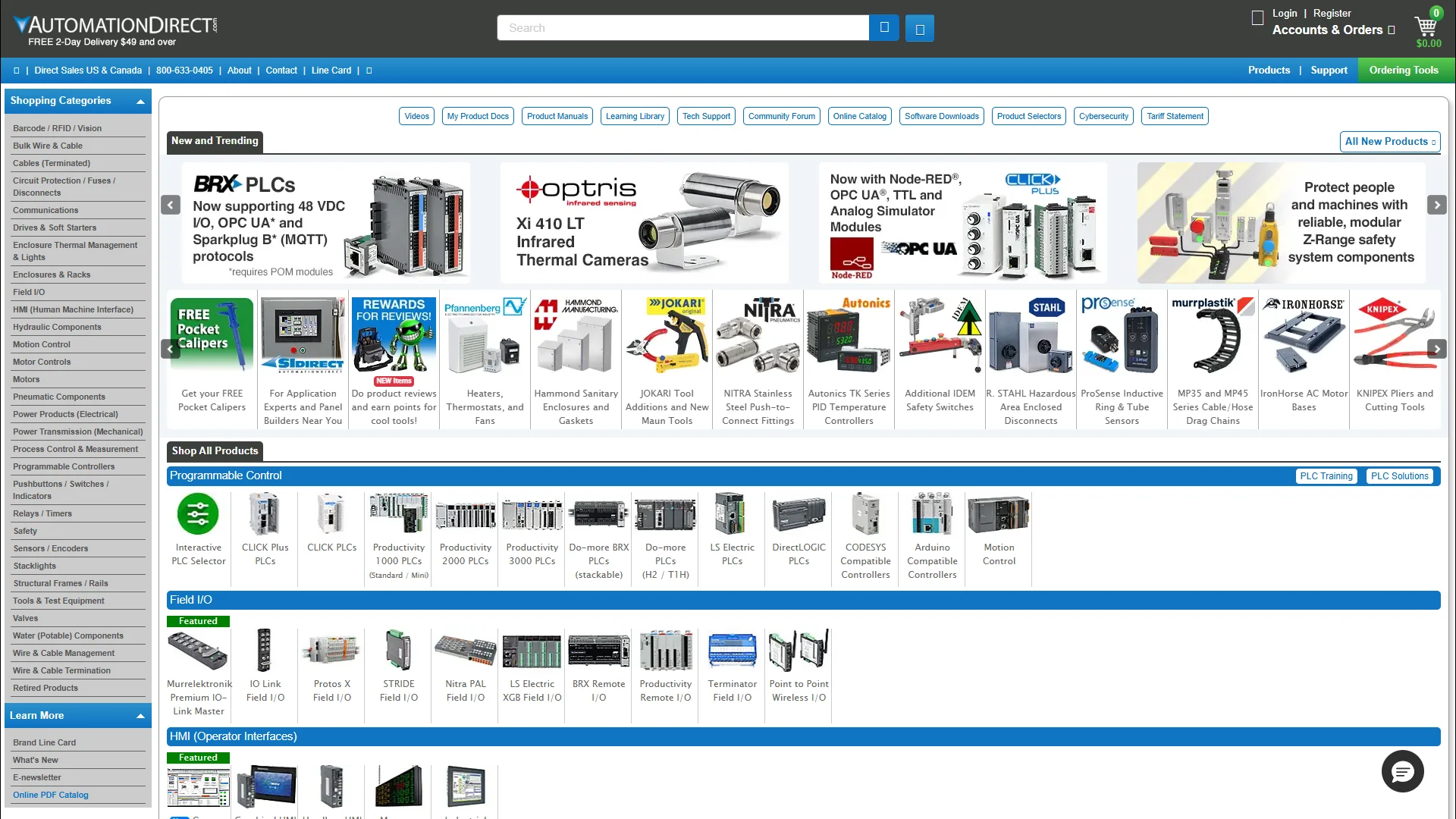
Overview: AutomationDirect is identified in the supplied dossier as an industrial-automation website, with the positioning line “AutomationDirect.com | #1 Value in Industrial Automation.” The available record does not verify a specific current-transducer range, manufacturing history, materials, certifications, or performance specifications.
Pros / Key Features:
- Industrial-automation orientation is explicitly reflected in the supplied company evidence.
- May be relevant when current measurement is one part of a broader automation bill of materials.
- Current range, output, isolation, accuracy, and environmental ratings must be checked for the exact product.
Use Cases / Best For: AutomationDirect is best considered for control-panel, machine-automation, and industrial procurement workflows where related automation hardware is also required. The supplied research does not support attributing a particular current-transducer design or performance advantage to the company without a verified product page and datasheet.
4. ATO
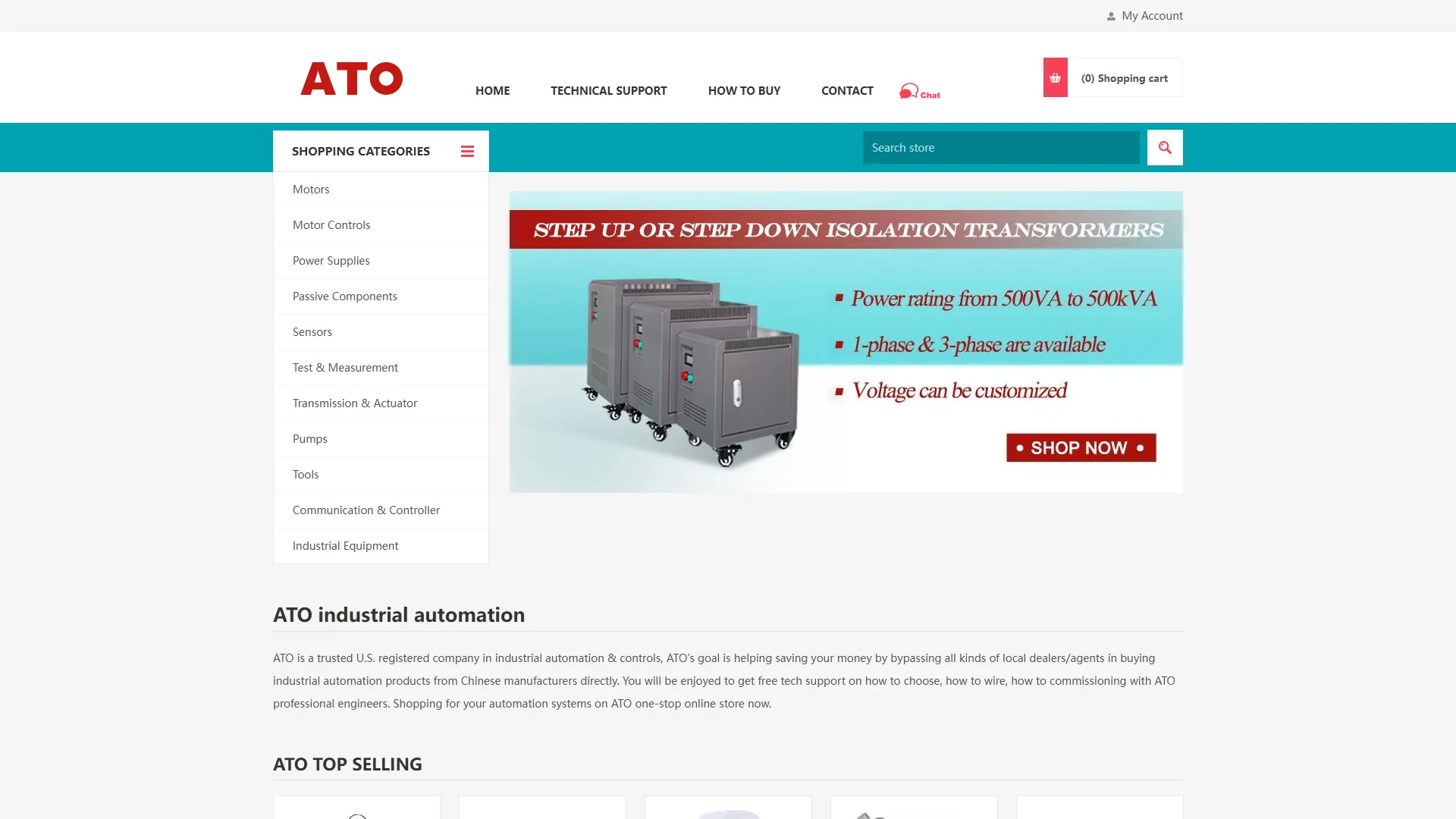
Overview: ATO is included in the supplied research as a current-transducer-category candidate, but the dossier does not clearly document its background, market positioning, product categories, materials, manufacturing, or technical specifications. As a result, its suitability must be assessed at the individual model level.
Pros / Key Features:
- Provides an official website for direct product and application checks.
- May be worth contacting when a specific industrial electrical configuration is required.
- No particular accuracy, range, output, certification, or customization claim is verified by the supplied dossier.
Use Cases / Best For: ATO may suit buyers conducting quotation-based or application-specific sourcing, provided the company confirms the required current-transducer model and documentation. Buyers should request a datasheet, dimensional drawing, wiring information, environmental limits, and compliance evidence before approval.
5. Zot Supply
Overview: Zot Supply is described in the supplied evidence as an industrial supply source. The documented product evidence identifies a Belimo LMB24-3-T damper actuator, described as a non-spring-return actuator with 24 VAC/DC operation, on/off and floating-point control, a terminal strip, and a five-year warranty. Those details concern the identified actuator and should not be transferred to current transducers.

Pros / Key Features:
- The supplied record states that identified Belimo parts may be in stock and ready to ship.
- Sales contact information is provided in the research evidence for status-related inquiries.
- Current-transducer product details are not verified in the supplied dossier.
Use Cases / Best For: Zot Supply is best considered for industrial replacement-part procurement and availability checks, particularly where the required item is one of the documented supply products. A buyer seeking a current transducer should confirm that Zot Supply actually lists the needed device and should obtain the original manufacturer’s technical documentation before substituting it into a measurement circuit.
6. Stangenes
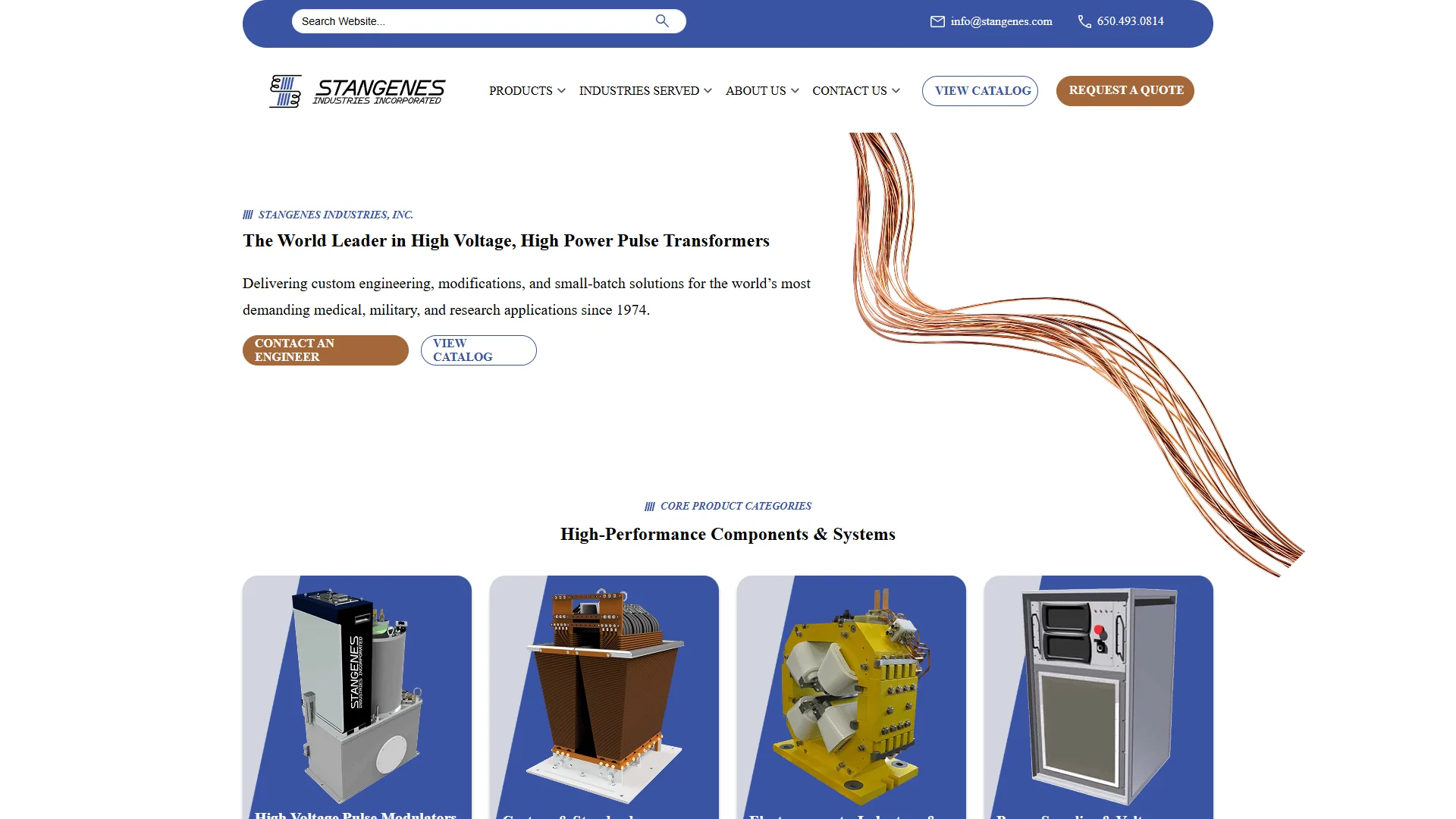
Overview: Stangenes is included in the supplied research for the current-transducer category. However, the dossier does not clearly verify a company history, product family, technical feature set, market scope, manufacturing capability, delivery policy, or certification record. No specific current-transducer model can therefore be responsibly recommended from the available evidence.
Pros / Key Features:
- An official website is available for direct product-scope confirmation.
- Model-specific details should be requested before technical comparison or purchasing.
- The supplied record does not substantiate particular accuracy, range, output, materials, or customization claims.
Use Cases / Best For: Stangenes is best for buyers who can communicate directly with the supplier and validate whether the requested current-transducer configuration is currently supported. The evaluation should include a formal datasheet, mechanical drawing, test or calibration information, compliance documentation, and confirmation of lead time.
How to Choose a Current Transducer
- Define the current: Establish nominal, continuous, overload, and peak current. A device that is accurate at nominal current may not be suitable for transient-heavy equipment.
- Identify the waveform: Confirm whether the circuit contains DC, AC, pulsed DC, switching waveforms, or mixed current. Do not assume an AC-only sensor can measure DC.
- Check isolation and safety: Review isolation voltage, insulation category, creepage, clearance, and installation requirements where the measured circuit is hazardous or high energy.
- Match the output: Select the required analog voltage, analog current, digital, frequency, or other interface so it is compatible with the PLC, meter, converter, or data-acquisition system.
- Verify accuracy and response: Compare accuracy, offset, linearity, temperature drift, bandwidth, response time, and noise under the actual operating conditions.
- Confirm installation: Check aperture size, busbar or conductor dimensions, mounting orientation, terminal arrangement, cable routing, and available enclosure space.
- Review power requirements: Confirm supply voltage, consumption, polarity, startup behavior, and allowable supply tolerance.
- Consider the environment: Temperature, humidity, vibration, contaminants, altitude, and enclosure rating can materially affect reliability.
- Validate documentation and supply: Use the exact part-number datasheet, wiring diagram, compliance information, calibration data, warranty terms, and current lead time before release to production.
Final Verdict
Hangzhi is the clearest first choice in this group for buyers seeking a specialist current-measurement supplier, although the exact model must still be selected from its official documentation. DigiKey is more appropriately viewed as a component-sourcing channel, while AutomationDirect is oriented toward broader industrial-automation procurement. ATO may be relevant for application-specific sourcing but requires direct model verification. Zot Supply is documented primarily as an industrial supply source with evidence concerning Belimo actuator availability, not current-transducer performance. Stangenes remains a candidate requiring direct confirmation because the supplied record contains little verified technical detail. Across all six, the decisive factors are current range, waveform, isolation, output compatibility, environmental rating, documentation, and availability—not brand name alone.
FAQs
What does a current transducer do?
A current transducer measures current in a conductor and produces an output that another device can read for monitoring, control, protection, or instrumentation. The output and measurement method vary by model.
Can one current transducer measure both AC and DC?
Some models are designed for both AC and DC, while others are limited to one type. The measurement capability must be confirmed in the exact product datasheet; it should not be inferred from the supplier name or product category.
Is the cheapest current transducer the best option?
Not necessarily. A lower purchase price may be outweighed by unsuitable bandwidth, inadequate isolation, output incompatibility, poor temperature performance, difficult installation, or insufficient documentation. Total application fit is more important than price alone.
