
Quick take — the choice in plain terms
Right off the bat: if you want neat, reliable backup and better self-consumption at the household or small commercial level, a hybrid inverter setup is often the smarter pick. If your project aims for utility-scale generation, deep emission cuts, or complex feed-in arrangements, broader renewable solutions — wind, utility PV arrays, energy management platforms — start to make more sense. This comparison is about fit, not which tech is “best” across the board.
What Ktech ESS brings to the table
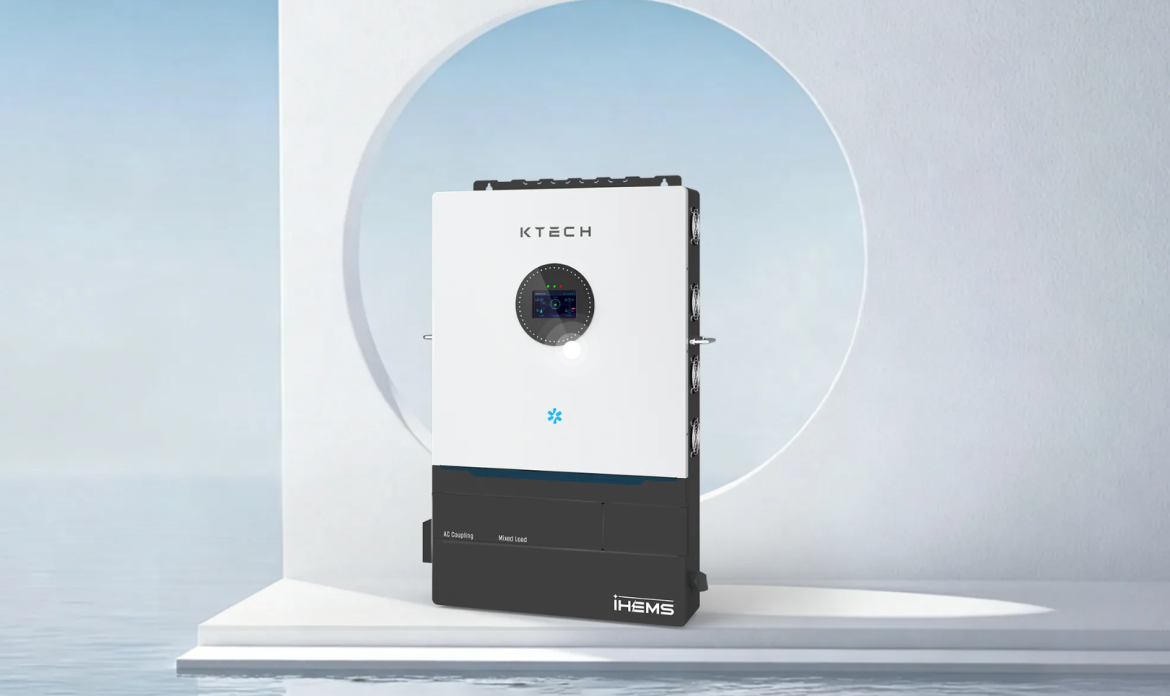
Ktech’s energy storage systems focus on pairing batteries with smart inverters and control logic. Expect:- predictable islanding and blackout resilience,- simpler commissioning for rooftop or small-site installs,- a compact footprint that’s easy to site in urban or suburban builds.For many projects the practical heart is the solar hybrid inverter system, which handles PV, battery and export control from one box. I’ve wired a fair few of these sorts of systems and they cut installation time compared with separate inverter-plus-controller rigs.
When Ktech ESS is the right call
Pick Ktech ESS when you need:- night-time load shifting and reliable backup for a few critical circuits,- simple export limits or self-consumption optimisation without a huge control stack,- a compact, turn-key approach for residential or light-commercial projects.It’s also a good fit if you want predictable ongoing maintenance: fewer moving parts, clearer fault points, and standardised commissioning checklists that most installers recognise. Sweet as for projects that need straightforward outcomes fast.
When broader renewable solutions outperform ESS
Consider other renewable routes when:- you’re designing a utility-scale farm or mixed-source microgrid,- long-duration storage (multi-day) or seasonal shifting is required,- you need integrated demand response or wholesale market participation.In those cases, system architecture gets more complex: separate inverters, custom EMS platforms, SCADA integration and sometimes multiple storage chemistries. The cost profile and grid interactions shift, and the project needs a deeper systems-engineering approach.
Costs, grid rules and practical trade-offs
Decisions hinge on a few clear trade-offs:- Capex vs operational simplicity: Ktech ESS tends to reduce soft costs and commissioning time.- Scale: beyond a certain megawatt threshold, modular hybrid boxes become less economical than centralised inverters.- Grid engagement: if you want to bid into markets or manage frequency at scale, you’ll need advanced controls beyond what a simple ESS package offers.One market worth watching is California, where high rooftop uptake and evolving export rules have driven rapid iteration in hybrid inverter features — that kind of regulatory pressure changes the value proposition quickly.
Common pitfalls installers and owners hit
Don’t assume a single-spec solution will cover everything. Watch out for:- under-specifying inverter continuous power relative to peak solar production,- neglecting thermal management for battery longevity,- ignoring firmware update paths and remote monitoring access.A tidy handover and clear O&M notes save heaps of headaches later. Get the tolerances and protection settings agreed up front so your warranty and safety boxes are covered.
How to run a straight comparison on your site
Do this simple exercise:- list your must-haves: backup hours, export limits, participation in markets,- sketch likely loads and daily profile for a typical week,- compare lifecycle cost, not just purchase price (include commissioning and expected maintenance),- check installer familiarity and spare-part availability in your area.That will quickly reveal whether a plug-and-play ESS or a bespoke renewables setup suits your project better.
Final synthesis
If your project needs tidy backup, quick deployment and sensible O&M, Ktech’s ESS approach delivers pragmatic value. If you’re building large-scale generation, complex market participation or multi-day storage, broader renewable architectures make more sense. Either way, match the tech to the real-world ops you’ll run day-to-day — that practical fit is the thing. Ktech sits squarely in the space for projects that favour straightforward performance and easier maintenance, which is often the smarter long-term choice for many sites.
