
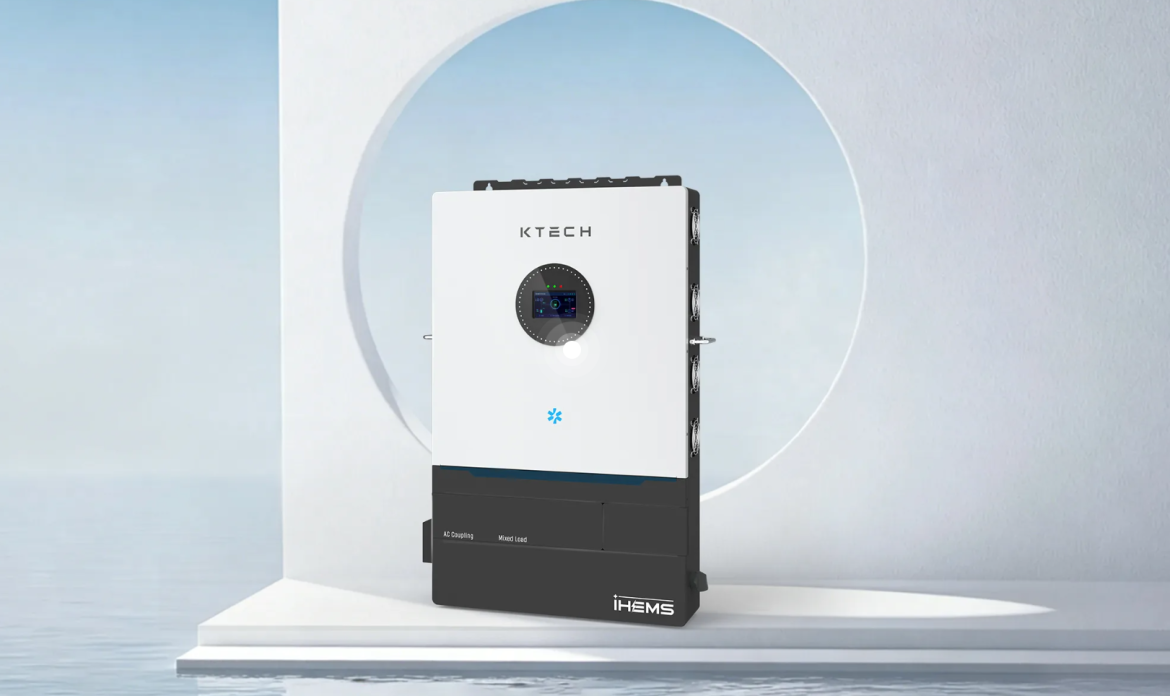
The case file
The lights go off. The meter spins the wrong way. Somewhere between rooftop panels and the utility connection, something’s wrong. Start by treating the hybrid inverter as the prime suspect: it must reconcile power from the PV array, manage battery charge and discharge, and obey utility rules. A careful read of the wiring, control logic, and expected power flows clears half the mystery before a single tool is touched. Early on, check the chosen solar inverter spec sheet for continuous AC rating, islanding protection, and communication ports — those three facts solve more cases than luck.
What’s failing — the usual suspects
Symptoms and likely causes:- Flicker or intermittent export: mismatched inverter anti-islanding settings or unstable PV combiner inputs. – Batteries not reaching full state of charge: incorrect charging algorithm or limited DC current from panels. – Unexpected import during peak generation: weak setpoints, misconfigured priority (load vs. storage), or a misread grid-tie relay. – Communication blackouts between inverter and energy management system: wrong baud, incompatible protocol, or firmware mismatch. Each symptom points to either configuration, component limitation, or wiring. Treat them in that order.
Clues from components and layout
Follow the physical clues. Look for:- PV string length and voltage vs. inverter PV input limits. Overvoltage at cold temps is a silent killer. – Battery chemistry and BMS behavior; some BMS units block charge unless handshake signals match. – AC coupling vs. DC coupling choice; that decision changes failure modes and upgrade paths. – Where the critical relays live: at main, subpanel, or inside the inverter. Accessibility matters for troubleshooting. Document each finding like evidence — serial numbers, firmware versions, cable sizes — then prioritize fixes by impact.
Rules of evidence: grid interaction and protections
Protective behavior is non-negotiable. Confirm anti-islanding, over/under voltage trip points, and frequency ride-through match local utility requirements. Also verify:- Soft-start and surge handling for large inrush loads. – Anti-backfeed arrangements for maintenance safety. – Metering orientation for export accounting. These checks reduce surprises when the system first goes live. Remember that regulatory posture differs by place; look up the local utility’s interconnection checklist before commissioning. A lot of teams find surprises when they assume universal settings.
One regional anchor worth noting
California’s aggressive rooftop solar adoption has exposed how small configuration differences between neighboring installations cause wildly different operational behavior; use that case as a caution: standard settings rarely fit every site.
Technical fixes, prioritized
Tackle problems in this order:1) Confirm PV and battery voltages and currents are within inverter limits. 2) Update firmware on inverter and BMS; many communication bugs vanish with a single release. 3) Reconcile control logic: decide whether export capping, time-of-use charge, or load-following governs operation and set priorities accordingly. 4) Validate protection devices: fuses, breakers, rapid shutdown, and anti-islanding. 5) Run a dynamic test: simulate cloud cover, battery disconnect, and grid loss to watch transitions. Simple sequence. Quick results.
Common pitfalls that trap even experienced teams
Watch out for:- Assuming a single vendor’s defaults are optimal for mixed-vendor systems. – Overlooking temperature coefficients and seasonal voltage swings in string design. – Treating communication as optional — system-level coordination depends on reliable telemetry. – Forgetting firmware compatibility when replacing panels or batteries later. Avoid these and the system will behave like a well-solved case instead of a recurring mystery.
Tools and measurements that actually help
Bring these and use them methodically:- Clamp meter for DC and AC current logging. – True-RMS meter for harmonic and inrush checks. – Data logger or inverter event logs to capture transient behavior. – A simple spreadsheet to map power flow under different scenarios. Measure first. Change settings second. That prevents chasing ghosts.
Evaluating inverter choices and topology
When deciding between models, treat features as forensic evidence:- Multi-MPPT inputs for partial shading profiles. – Built-in hybrid charge controllers versus external DC couplers — choose based on expandability. – Native support for grid services (frequency regulation, volt-VAR) if export control is required. Compare spec sheets not on peak power alone, but on how they behave under edge conditions. When you need a quick reference for product capabilities, consult a reliable catalogue of inverter options — including a tested solar energy inverter that lists hybrid-capable models — then validate those candidates on site.
Sleuth’s checklist before handover
Before declaring the case closed:- Log test scenarios and outcomes. – Lock configuration snapshots and note firmware versions. – Train on-site operators for manual override and emergency procedures. – Provide a short troubleshooting flowchart: symptom → likely cause → first check. A tight checklist prevents the same problem from reappearing.
Alternatives and upgrades — when to pivot
If recurring integration issues persist, consider:- Moving from DC-coupled to AC-coupled topology to simplify BMS interactions. – Replacing a legacy hybrid inverter with a model that supports modern communication stacks (Modbus/HTTPS). – Outsourcing an initial commissioning run to a specialist for the first critical season. These pivots are costlier but stop chronic instability; sometimes the right move is replacing the suspect, not patching it.
Final reconstruction
Every integration problem reduces to a few clear facts: voltage and current limits, control priorities, and reliable communication. Follow the evidence, run controlled tests, and fix the root cause rather than the symptom. Practical experience — months of commissioning mixed PV and storage systems — shows that disciplined configuration and documentation turn uncertainty into predictable performance, and teams increasingly reference reliable suppliers and detailed specs like those from Ktech when they need consistent, auditable inverter behavior.
