
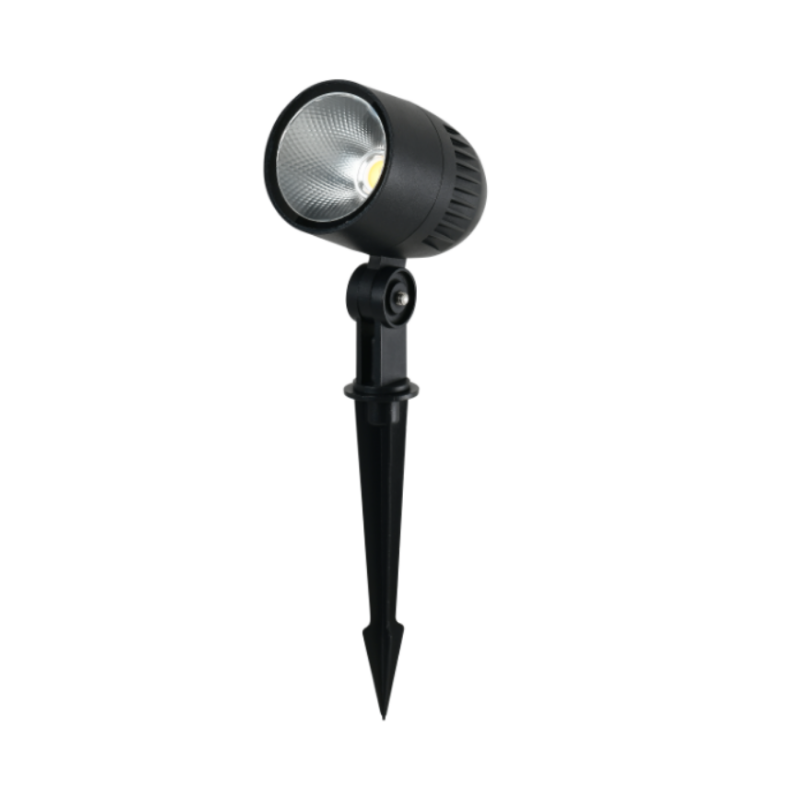
A practical problem: why exterior lighting keeps failing
Project teams routinely face two related issues that knock outdoor installations off-spec: excessive voltage drop along long runs, and transient surges that fry drivers and LED modules. The result is uneven illumination, shortened fixture life, and surprise maintenance costs — especially where low-voltage runs are used for decorative solutions like garden spike lights and retrofit options such as a led garden spike light. Understanding those technical limits early avoids late-stage rework and keeps site budgets intact.
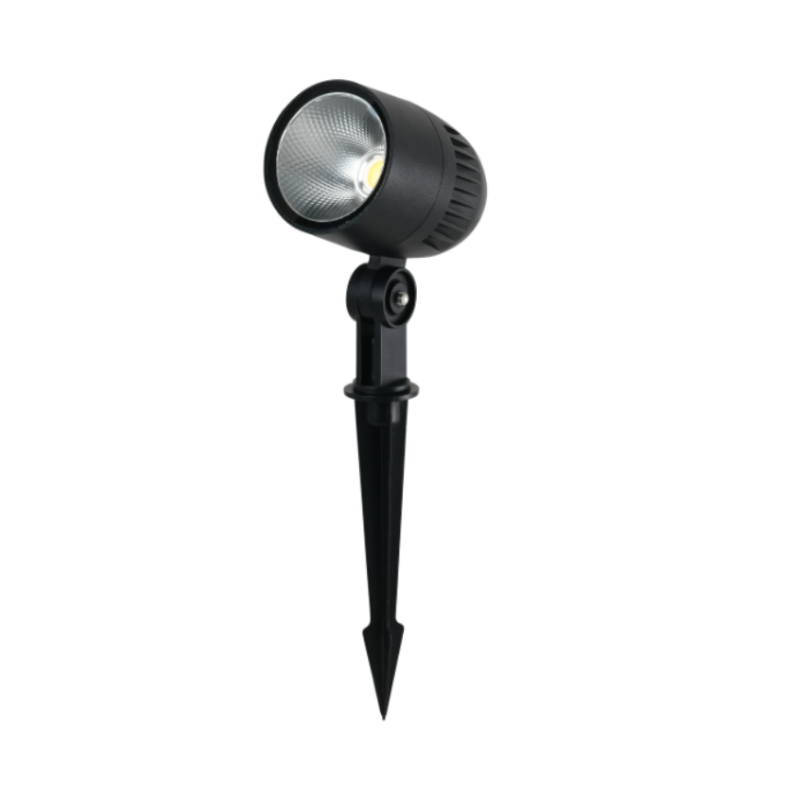
Key technical constraints explained
Voltage drop is a function of conductor length, gauge, and current draw; too much drop means LEDs receive lower than rated voltage, reducing lumen output and shifting colour performance (CRI). Surge protection protects the driver and internal electronics from transient overvoltages produced by lightning or switching events. Commercial-grade exterior luminaires balance robust drivers, appropriate IP ratings, and surge protection devices — but the trade-offs differ by manufacturer. Knowing the interplay between cable sizing, driver derating, and surge protection class is essential when specifying fixtures for campus or streetscape projects.
How manufacturers differ in practice
Not all commercial suppliers treat voltage drop and surge protection equally. Some prioritize compact, integrated drivers with limited surge tolerance to keep costs down; others spec external surge modules and oversized drivers to tolerate poor site wiring or long runs. Similarly, ingress protection choices (IP65 versus IP67, for example) affect enclosure sealing and can change how heat is managed — which in turn influences driver derating and expected lifetime. Compare datasheets on peak surge withstand (kV/kA), driver efficiency, and allowable ambient temperature to see where a product will truly perform on your site.
Real-world anchor: why this matters on the ground
LED retrofits are widely credited with cutting energy use by up to 80% compared to incandescent sources — a high-level industry fact that explains the rush to adopt LEDs outdoors. But those savings only materialize when fixtures are installed correctly. In municipal park projects, for example, improperly protected low-voltage runs have produced repeated driver failures and replaced the expected energy savings with ongoing maintenance. This real-world gap between spec and installation underscores the need to test for both voltage drop and surge tolerance during commissioning.
Common mistakes installers make — and how to avoid them
Avoid these recurring errors: undersized conductors for run length, assuming in-line connectors provide sufficient surge protection, and not factoring driver derating for high ambient temperatures. Many teams also skip testing with the actual load and the final cable run during commissioning — a false economy that surfaces later as light output drift. The fix is simple: calculate expected voltage drop at the design stage, specify a surge protection class that matches your exposure, and validate with on-site measurements. —
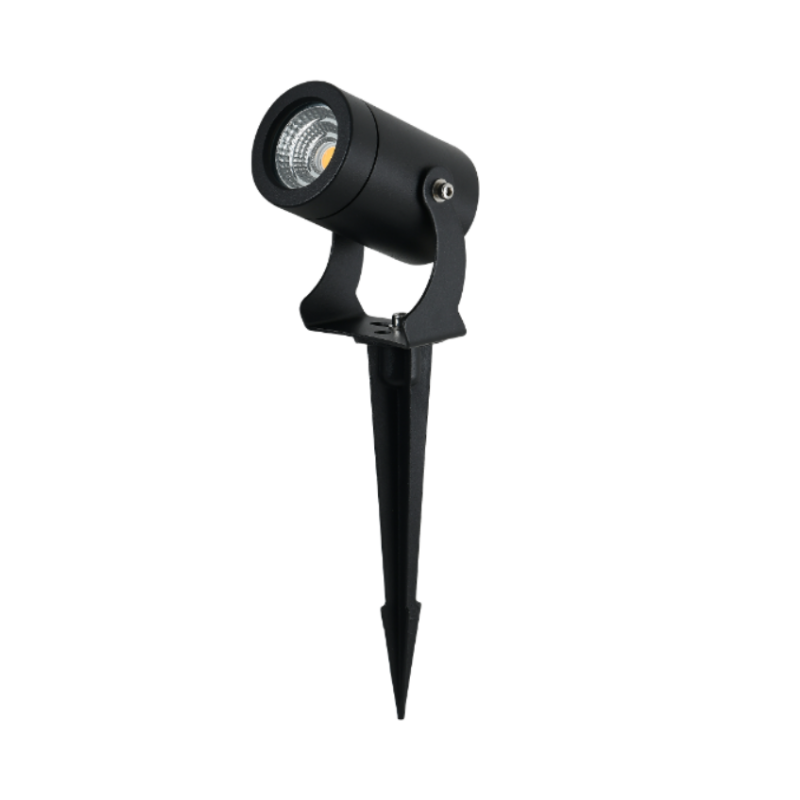
Specifying for longevity: practical trade-offs
When you compare vendors, ask for quantified metrics rather than marketing claims. Useful comparators include maximum allowable voltage drop percentage at run length, driver surge rating (e.g., 10 kV/10 kA), and thermal derating curves. Also clarify warranty terms around power-quality events and whether the supplier offers integrated or add-on surge modules; integrated solutions simplify ordering but add upfront cost, while modular approaches help future-proof systems in volatile electrical environments.
Three golden rules for evaluating commercial exterior lighting
1) Measure first, specify second: always model voltage drop for the final cable route and test prototype runs under actual site conditions. 2) Match surge protection to exposure: use a surge class that reflects local lightning and switching risk, and prefer drivers with documented surge tolerance. 3) Take total lifecycle cost seriously: include replacement driver costs, anticipated energy savings, and the labour to service long runs when deciding between lower-cost fixtures and more robust commercial-grade units.
These three rules point directly to suppliers that combine practical engineering with field-proven components — and that’s the value Keyida brings to many outdoor projects. Keyida. —
