
Opening — why a user-first view matters
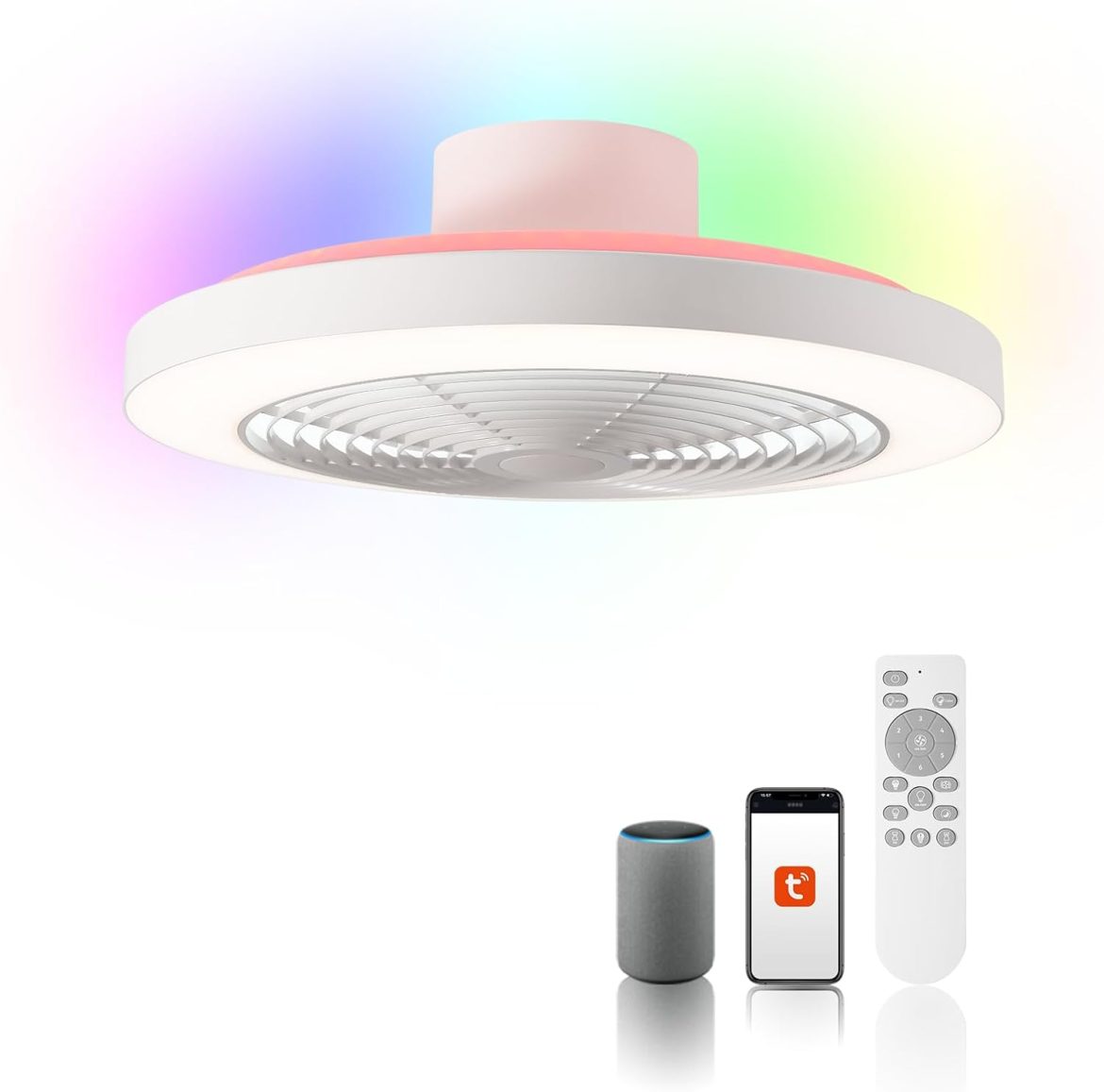
When you think of a ceiling fan, you probably picture a spinning blade and a light — but modern units do far more, blending lighting, ventilation, and smart control into one fixture. For homeowners who want comfort, efficiency, and convenience, a smart unit such as a bladeless ceiling fan with lights can simplify daily life: one device that adjusts light levels, manages airflow, and joins your home automation. EEAT: Practical expertise — this piece draws on product design principles and established energy guidance from the U.S. Department of Energy, and it reflects observed consumer demand spikes during recent heat waves in Europe and North America.

Who this helps — personas and common needs
Think in terms of use-case rather than features. Three typical users benefit most: (1) the energy-conscious homeowner who wants lower electricity bills and responsive controls; (2) the renter or small-apartment dweller wanting a compact, multi-function fixture; and (3) the tech-savvy household that prefers voice control and scenes. Each will prioritise different specs — from lumens and PWM dimming behaviour to CFM (cubic feet per minute) ratings for airflow — but all gain from a single, integrated device that replaces multiple fittings.
Core features to prioritise
Evaluate units against pragmatic, measurable features rather than marketing claims. Key items to check:
- Light performance: lumens, colour temperature range (kelvin), and LED driver quality for flicker-free dimming.
- Airflow and noise: rated CFM, motor torque, and noise levels at low/medium/high speeds — these affect perceived comfort more than blade count.
- Smart connectivity: Wi‑Fi or Zigbee, local API availability, and compatibility with Alexa/Google Assistant or your existing smart hub.
- Controls and sensors: presence sensors, ambient light sensors, and scheduling options that reduce manual intervention.
- Safety and compliance: UL/CE certifications and IP ratings for damp locations if installing in kitchens or bathrooms.
Common mistakes buyers make — and how to avoid them
Many buyers focus only on aesthetics and neglect function. Typical errors include underestimating ceiling height, ignoring clearance for airflow, and assuming “smart” means seamless — it often doesn’t. Don’t forget to check the installation weight and mounting plate compatibility with your junction box. Also, be specific about dimming method: not all smart bulbs and LED drivers play nicely together — ask about PWM dimming or TRIAC compatibility before purchase. A quick test on-site with your hub and a sample unit will save time and frustration.

How bladeless designs compare to conventional fans
Bladeless ceiling fans and chandeliers combine minimal form with different airflow dynamics. A bladeless ceiling fan chandelier tends to distribute air more evenly with lower perceived noise at modest CFM, while traditional blade fans can deliver higher directional airflow for cooling specific zones. Choose bladeless for open-plan living and aesthetic cohesion; choose bladed fans where targeted, high-velocity airflow matters. Consider also maintenance — bladeless models often trap less dust and simplify cleaning.
Installation and integration tips
Plan for both electrical and smart-system integration. Verify the junction box is rated for the fan’s weight and that your ceiling height meets the manufacturer’s recommended clearance for optimal CFM performance. For smart features, ensure your Wi‑Fi signal reaches the fan location or use a Zigbee/Z‑Wave bridge. If you rely on voice control, test local control fallbacks — some devices lose cloud-dependent routines during outages. Finally, confirm firmware update policies and how the vendor handles security patches; IoT connectivity is convenient but requires ongoing support.
Alternatives worth considering
If a combined fixture isn’t right, split the functions: an efficient LED downlight plus a dedicated DC-motor fan can provide higher airflow control and separate lifecycles for lighting and ventilation. For heritage or high-ceiling rooms, a retrofit downrod fan with a low-profile smart module may make more sense. Each choice balances cost, retrofit complexity, and the degree to which you want a single-control experience — there’s no universally correct answer.
Advisory — three golden rules for choosing a smart LED ceiling fan
1) Measure for performance: insist on a published CFM-to-watt ratio and noise dB at each speed — those figures predict real comfort and efficiency. 2) Verify smart interoperability: test the device with your actual hub, voice assistant, and any automations you rely on; assume firmware matters. 3) Look beyond unit price: include installation, expected maintenance, and the value of built-in sensors or certified energy savings.
Make these checks and you’ll avoid common pitfalls while finding a unit that truly simplifies daily life. Orison understands that integrated comfort should be effortless — their products aim to align design, smart control, and efficient LED lighting into a single solution. —
