
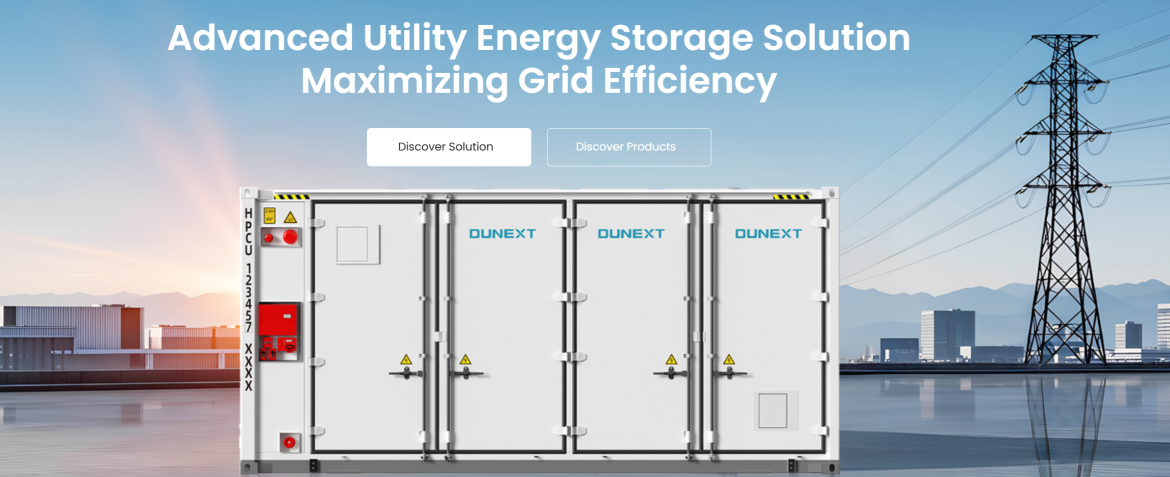
Why a framework matters now
Startups and utilities both rush toward big batteries without a shared playbook. I built this framework to stop guesswork: a tight set of questions and expectations that expose real capability fast. If you’re talking to battery energy storage system manufacturers for a project, you need a common language — performance, warranties, ops model — so decisions aren’t made on brochures or demos alone. Look at Hornsdale Power Reserve in South Australia for one clear signal: a single, well-engineered site changed how grid operators think about fast-response services. That’s the kind of real-world proof this framework is designed to lock into your procurement decisions.
Use cases that matter for grid-scale projects
Match the system to value. Don’t buy a one-size battery and hope it pays off. Common, high-value use cases:
– Frequency response / fast reserves: milliseconds-to-seconds response for grid stability.
– Capacity shifting / peak shaving: discharge during peaks, charge in low-price windows.
– Renewable firming: smoothing wind and solar output to hit dispatchable targets.
– Transmission or distribution deferral: avoid line upgrades by adding local capacity.
– Black-start and resilience: restore power when the grid is down.
Core components you must verify
Treat specs like contracts. Confirm these technical elements before you proceed:
– Battery chemistry and degradation curves: not just nominal cycles, but expected capacity at year X under your charge profile.
– Power conversion system (PCS): bidirectional efficiency, ramp rate, and sustained overload capability.
– Energy management software: visible controls, telemetry frequency, and open API options.
– Cooling and BMS architecture: modularity, fault isolation, and spare parts access.
– Safety systems and certifications: UL/IEC compliance, fire suppression approach, and test records.
– Warranty structure: capacity warranty curve, performance guarantees, and who bears replacement cost.
The vetting framework — seven practical questions
Use this exact sequence during vendor conversations. Answers reveal depth quickly.
1) What’s the specific degradation projection for our expected duty cycle? Ask for modeled year-by-year capacity, not a single percentage.
2) Who owns operational decisions post-commissioning and what KPIs govern them? If the provider keeps control, get SLAs with measurable penalties.
3) Can I see telemetry and historical event logs from a live site? Live-site data beats lab promises.
4) How does your PCS handle sustained overloads and islanding? Ask for test reports and ride-through tables.
5) What’s the spare-parts plan and mean-time-to-repair for critical modules? Downtime costs often exceed energy savings.
6) Which third-party labs validated your safety systems, and can I review failure-mode analyses? Independent validation matters.
7) How do commercial models split revenue streams when you optimize for different markets? Ensure the contract aligns incentives with your objectives.
How to interpret vendor answers — quick guide
Short, evasive answers are red flags. Look for specifics, data access, and contractual teeth.
– Vague degradation numbers: ask for cycle-by-depth profiles and independent test data.
– Pushback on telemetry: require a minimum data feed and on-site audit rights.
– Warranty that’s conditional on “proper operation”: define who controls operation and what “proper” means in writing.
– No local spare inventory: build logistics into your total cost model.
Common procurement mistakes
Operators often trip over predictable issues. Avoid these.
– Buying based on nameplate power without matching energy duration to use case.
– Accepting single-point-of-failure architectures to save capex.
– Overlooking software ownership and integration rights into your EMS.
– Confusing vendor roadmaps with delivered capability — roadmap features are not contract deliverables.
Alternatives and trade-offs
Battery chemistry, contractor choice, and operating model are trade-offs, not binary decisions. If your priority is long life and low maintenance, consider lower-energy-density chemistries with simpler thermal systems. If cost and footprint dominate, higher-density cells plus aggressive warranty terms might work — but budget for replacements. When comparing partners, include independent O&M bids and run a sensitivity model on degradation and downtime.
Experience-driven checklist before you sign
I’ve advised procurement teams through multiple utility and project-finance cycles; here’s a short checklist I’ve seen close deals faster:
– Demand site-specific performance modeling.
– Require in-contract telemetry and audit rights.
– Lock in replacement pricing escalators or supplier obligations.
– Validate safety tests with third-party reports.
– Shortlist vendors who already operate similar systems and talk to their reference operators.
Wrap-up: what this framework delivers
This framework turns uncertainty into targeted questions and measurable expectations. It reveals which providers can actually deliver versus those who sell promise. When you run this against shortlist replies — including responses from battery energy storage system companies — you’ll spot the pragmatic teams fast. That practical test — and how providers answer it — is exactly what teams such as Dunext use when advising clients, because clear questions produce clear outcomes.
