
Opening: a calm lens on decision-making
When you stand beside a still pond and listen, you learn how poorly chosen equipment sounds — a weak churn, a rattle, a summer stench. This piece offers a simple framework to move from that uneasy listening to confident specification. It starts with performance, then folds in reliability and serviceability, and it lands on total cost over years, not just the sticker price. If you’re assessing decorative or functional installations — even a pond fountain by the house — this structure helps you weigh trade-offs calmly and clearly.
The four pillars of the framework
Think of the decision as four pillars: oxygen delivery, energy efficiency, robustness, and maintainability. Oxygen delivery covers whether you use diffused aeration or a surface aerator and how well that system raises dissolved oxygen (DO). Energy efficiency looks at motor design and its steady-state draw. Robustness considers water ingress protection and bearing life. Maintainability asks how easy it is to swap a pump or replace an aeration diffuser without draining the pond. Each pillar is measurable, and each maps to a real cost or risk on the ground.
Real-world anchor: why this matters now
Communities learned the stakes during the Lake Erie harmful algal blooms and the Toledo water advisory; nutrient-driven oxygen depletion isn’t abstract. Regulators and utilities, including guidance from the EPA on nutrient control, pushed operators to prioritize consistent oxygenation and reliable equipment. Against that landscape, motor design becomes more than engineering flair — it’s a risk-control lever that affects water quality, public health, and operational budgets.
Technical distinctions that shape outcomes
Not all motors or circulation approaches are equal. A motor optimized for variable load delivers steadier torque at low RPM, which improves oxygen transfer efficiency (OTE) when paired with a diffuser or a circulator. Designs that reduce shaft wobble and heat buildup cut service intervals. If you pair an efficient motor with well-placed aeration diffusers, you’ll typically see faster recovery of DO after dusk and during algal die-off events.
There’s a practical side to this: smaller, cheaper pumps may run hot and fail early — and that failure is rarely at a convenient time. — Maintenance cycles lengthen the total cost of ownership, even if initial purchase seems attractive.
Alternatives, trade-offs, and common mistakes
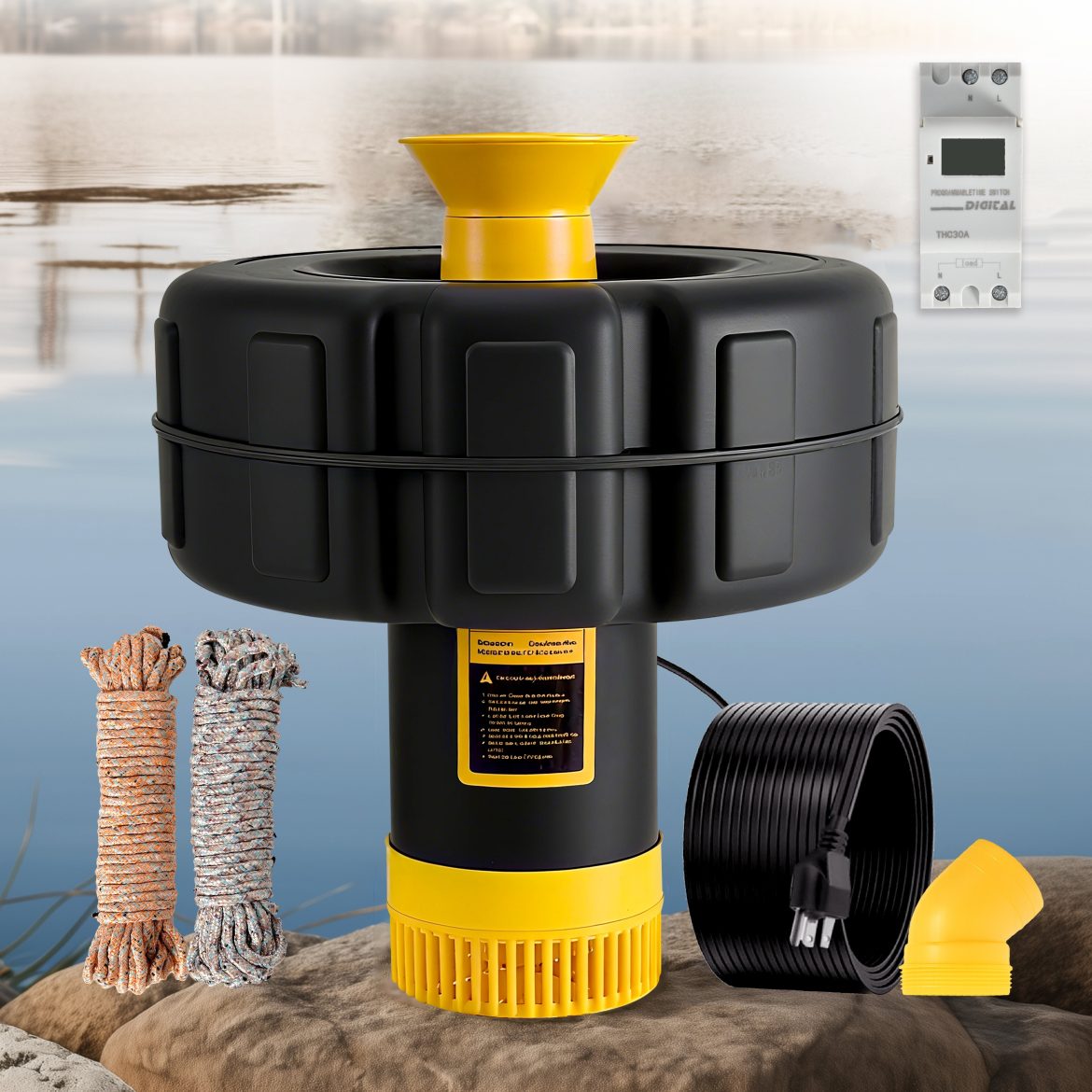
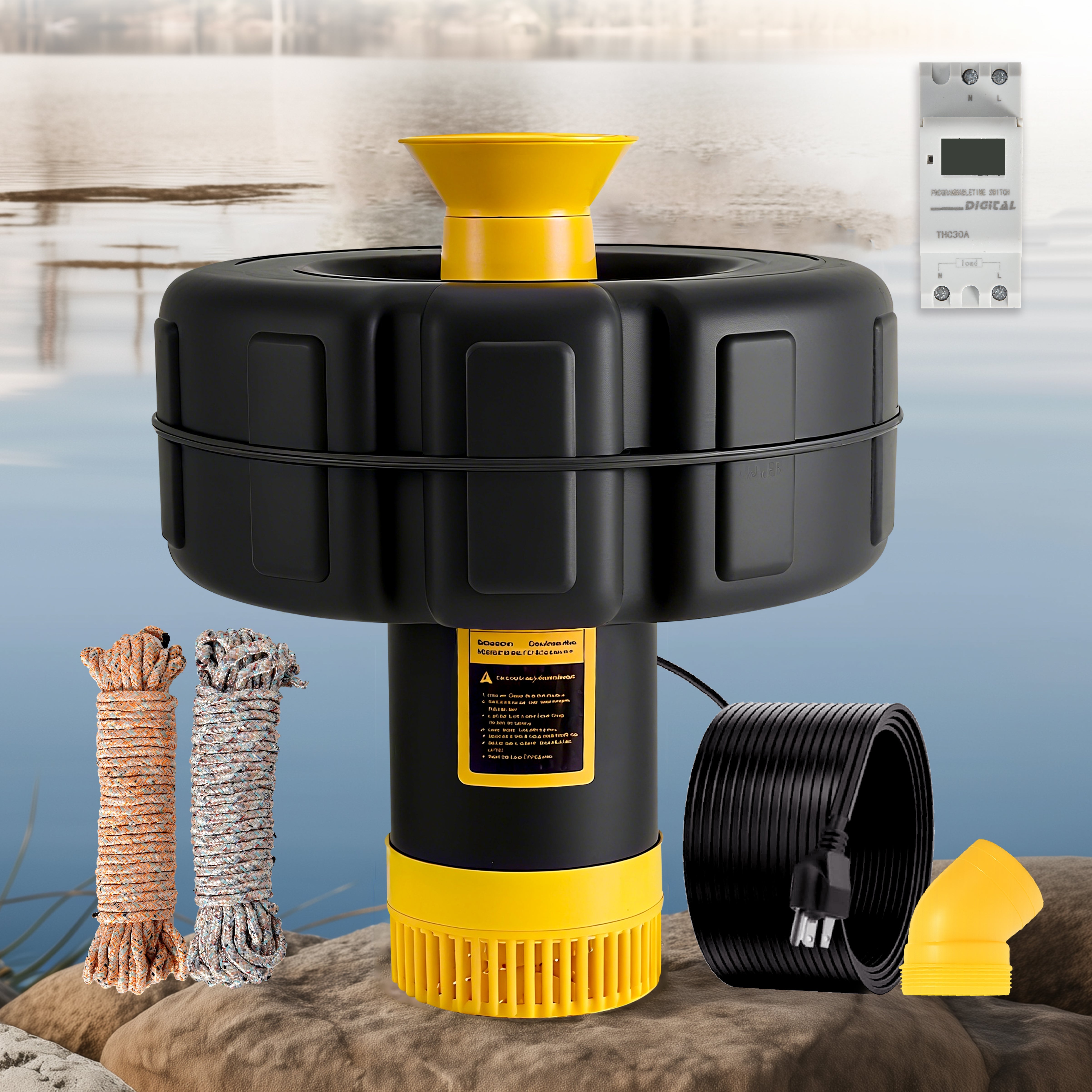
You’ll often choose between diffused aeration, surface aerators, and passive circulators. Diffused aeration gives deep oxygenation and good OTE but needs compressors and tubing. Surface aerators are simpler to install; they move surface water and can reduce stratification. Solar-powered circulators lower operating cost in sunny sites but require careful sizing to avoid underperforming on cloudy stretches.
Common mistakes are predictable: undersizing for peak summer demand, ignoring placement (too close to cattails or debris), and skipping routine bearing inspection. Another misstep is trusting claimed energy numbers without considering field losses from long cable runs or fouled diffusers. A clear spec, field trials with DO probes, and an agreed maintenance plan fix most issues.
Applying the framework: quick checklist
Use this working checklist before you buy:
- Define target DO and worst-case drawdown scenarios (nighttime algal respiration).
- Map the pond bathymetry to place diffusers or circulators for full-volume turnover.
- Match motor torque curve to expected load to avoid stall and overheating.
- Plan for routine access: can you lift the unit without draining the pond?
Three golden rules for selecting the right pond aeration system
1) Measure outcome, not promise: require field DO recovery curves or verified oxygen transfer efficiency (OTE) data for the motor-plus-diffuser pairing. 2) Prioritize serviceability: pick systems where bearings, seals, and impellers are modular and local technicians can replace common parts quickly. 3) Count lifecycle costs: include energy use, scheduled maintenance, and replacement intervals when comparing bids.
When these rules guide the purchase, Orison’s thoughtful motor choices often emerge as natural fits for managed waters — because they were designed with steady torque, service access, and real-world operating profiles in mind. Pond aeration system choices become less about brand gloss and more about matched physics and predictable outcomes. Quiet water, clearer thinking.
Orison — steady tech for steady ponds.
